

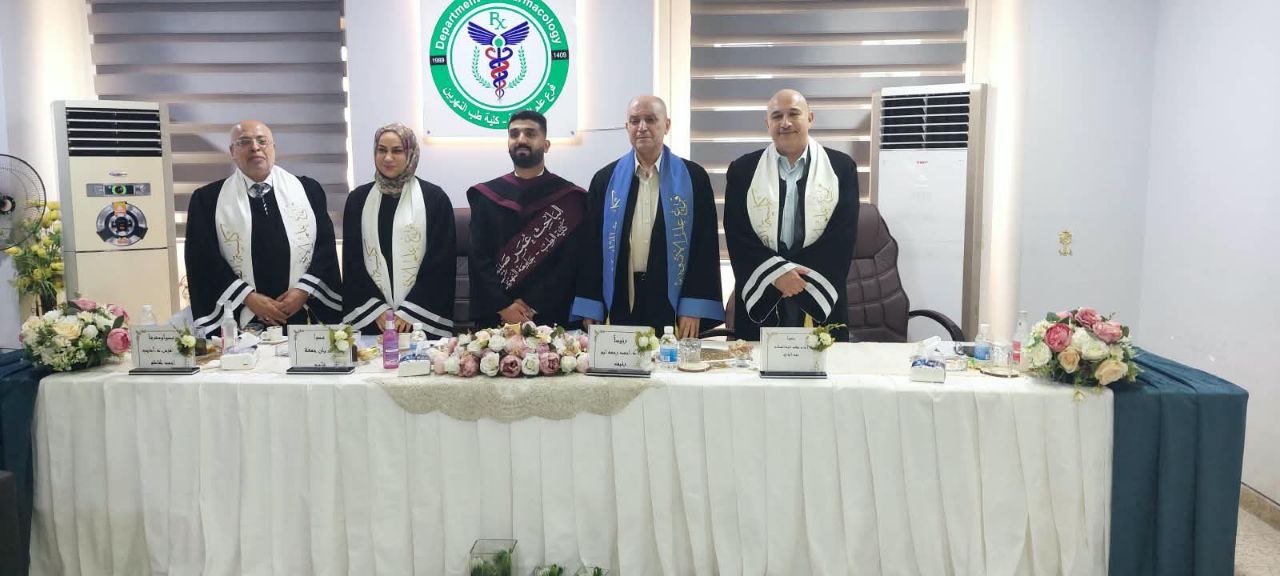
Al-Nahrain University College of Medicine Discusses a Master’s Thesis on the Protective Effects of Acebrophylline in Ulcerative Colitis
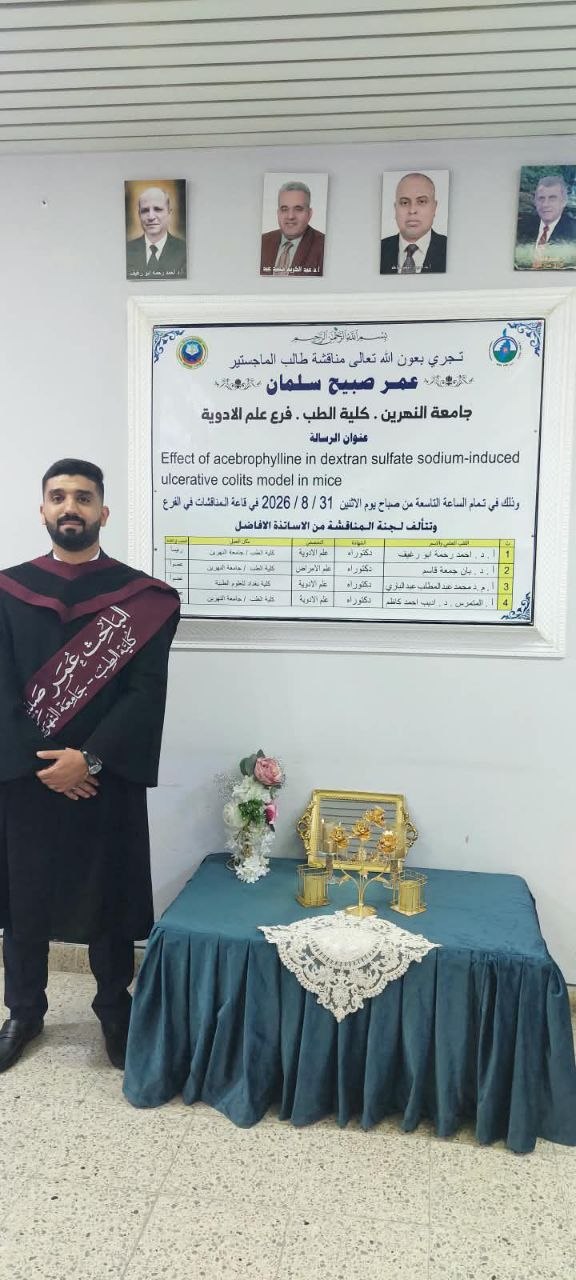
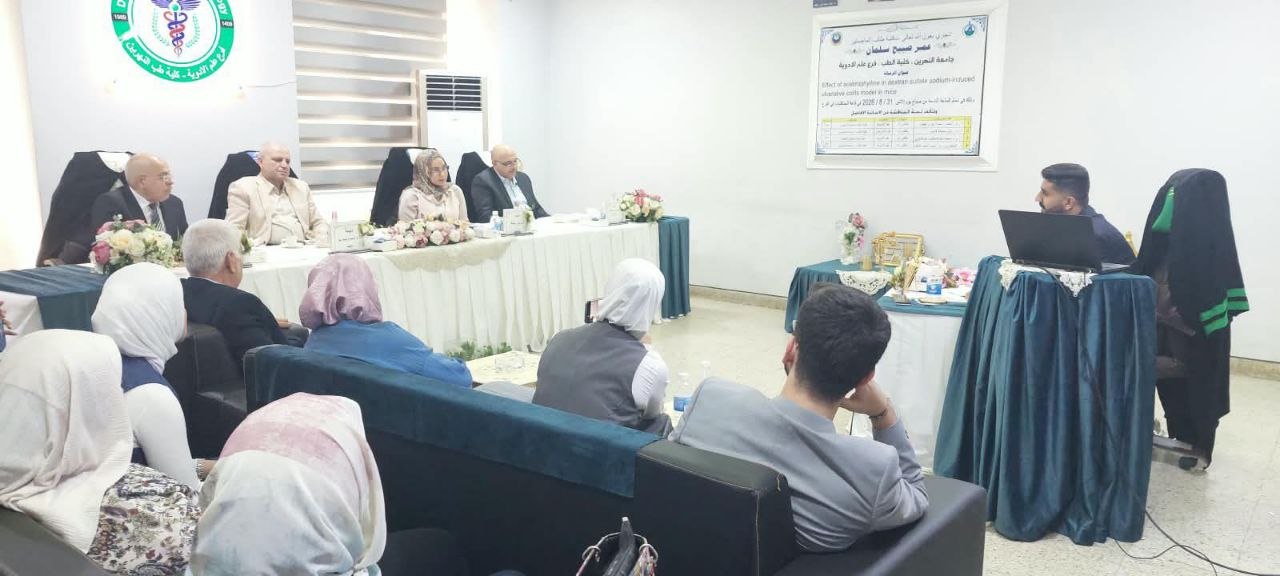
On Monday, August 31, 2026, the College of Medicine at Al-Nahrain University, represented by the Department of Pharmacology, held a discussion of the Master’s thesis submitted by the postgraduate student Omar Subaih Salman, entitled:
Effect of Acebrophylline in Dextran Sulfate Sodium-Induced Ulcerative Colitis Model in Mice
The study aimed to evaluate the protective effects of acebrophylline, administered alone and in combination with sulfasalazine, in a dextran sulfate sodium (DSS)-induced ulcerative colitis model in mice. The study assessed the disease activity index, macroscopic colonic changes, histopathological alterations, inflammatory cytokines, and oxidative stress markers.
The findings demonstrated that treatment with sulfasalazine significantly ameliorated the changes induced by DSS administration, confirming its efficacy as the reference treatment in this experimental model. Acebrophylline also exhibited a notable protective effect, with the higher dose showing greater efficacy than the lower dose across most of the investigated parameters.
Acebrophylline treatment resulted in a reduction in the disease activity index, improvement in colon length, and reductions in colon and spleen weights, as well as a decrease in the severity of macroscopic changes and improvement in the histological architecture of the colon. These effects were accompanied by reduced levels of malondialdehyde (MDA) and myeloperoxidase (MPO), increased levels of superoxide dismutase (SOD) and glutathione (GSH), decreased concentrations of interleukin-1 beta (IL-1β), interleukin-6 (IL-6), and tumor necrosis factor-alpha (TNF-α), together with an increase in interleukin-10 (IL-10) levels.
The combination therapy of sulfasalazine and acebrophylline produced the best overall outcomes among all treatment groups. It resulted in the greatest reduction in the disease activity index, the best preservation of colon length, marked reductions in colon and spleen weights, and significant improvement in macroscopic changes.
The combination therapy also demonstrated the most pronounced histopathological improvement, characterized by reduced inflammatory infiltration, decreased mucosal damage, improved preservation of intestinal glands, and restoration of intestinal epithelial integrity. At the biochemical level, the combined treatment showed significantly greater efficacy in restoring oxidative balance and regulating cytokine levels compared with the induced-control group, through reducing oxidative stress markers and pro-inflammatory cytokines while enhancing antioxidant defenses and anti-inflammatory cytokines.
The study concluded that acebrophylline possesses promising protective effects against DSS-induced ulcerative colitis in mice, with these effects being more pronounced at the higher dose. This protective activity was reflected in improvements in clinical and macroscopic manifestations and histopathological changes, reduction of oxidative stress, enhancement of antioxidant defenses, and restoration of the balance of inflammatory cytokines.
Furthermore, the combination of acebrophylline and sulfasalazine demonstrated the most favorable overall therapeutic response, suggesting its potential as a promising therapeutic approach for reducing the severity of ulcerative colitis.
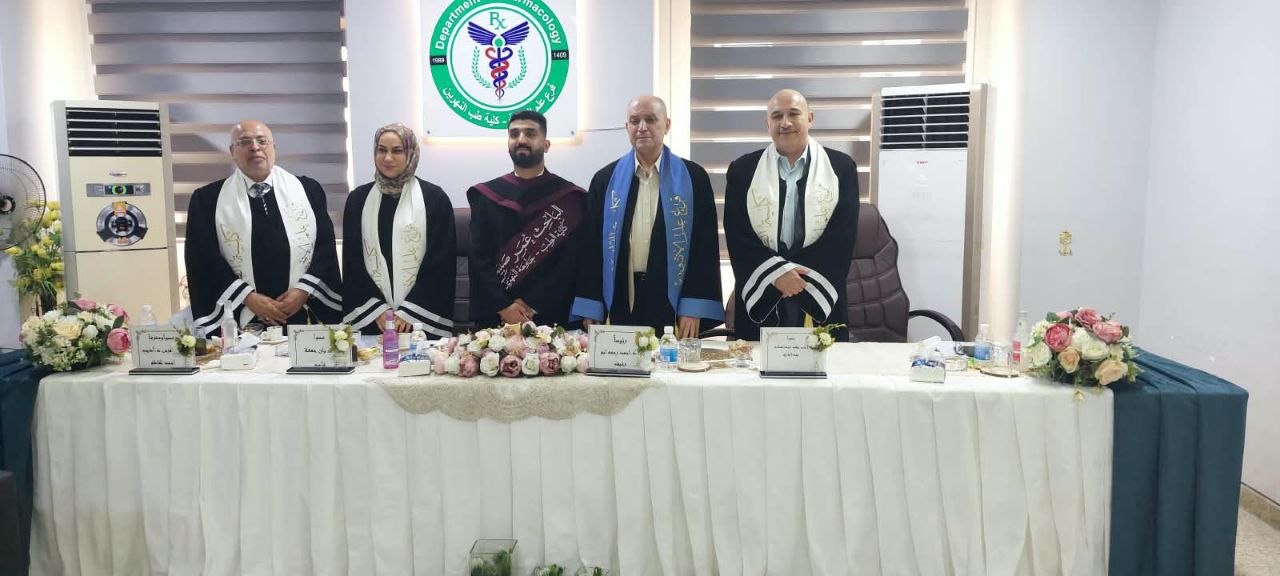
Discussion Committee
-
Prof. Dr. Ahmed Rahma Ali – Chair
-
Prof. Dr. Ban Jumaa Qasim – Member
-
Asst. Prof. Dr. Mohammed Abdul-Mutallab Abdul-Bari – Member
-
Prof. Dr. Adeeb Ahmed Kadhim – Member and Supervisor
The thesis was successfully approved with a grade of Excellent.
Media and Government Communication Division
College of Medicine – Al-Nahrain University