

Obstetrics and Gynaecology Branch at the Faculty of Medicine Hold Workshop on Monitoring the Pulse of the Foetus During Pregnancy and Childbirth
Obstetrics and Gynaecology Branch at the Faculty of Medicine Hold Workshop on Monitoring the Pulse of the Foetus During Pregnancy and Childbirth
Editor: Awras Fawzi
Photography: Ahmed Abboud
Tuesday 24th March 2015
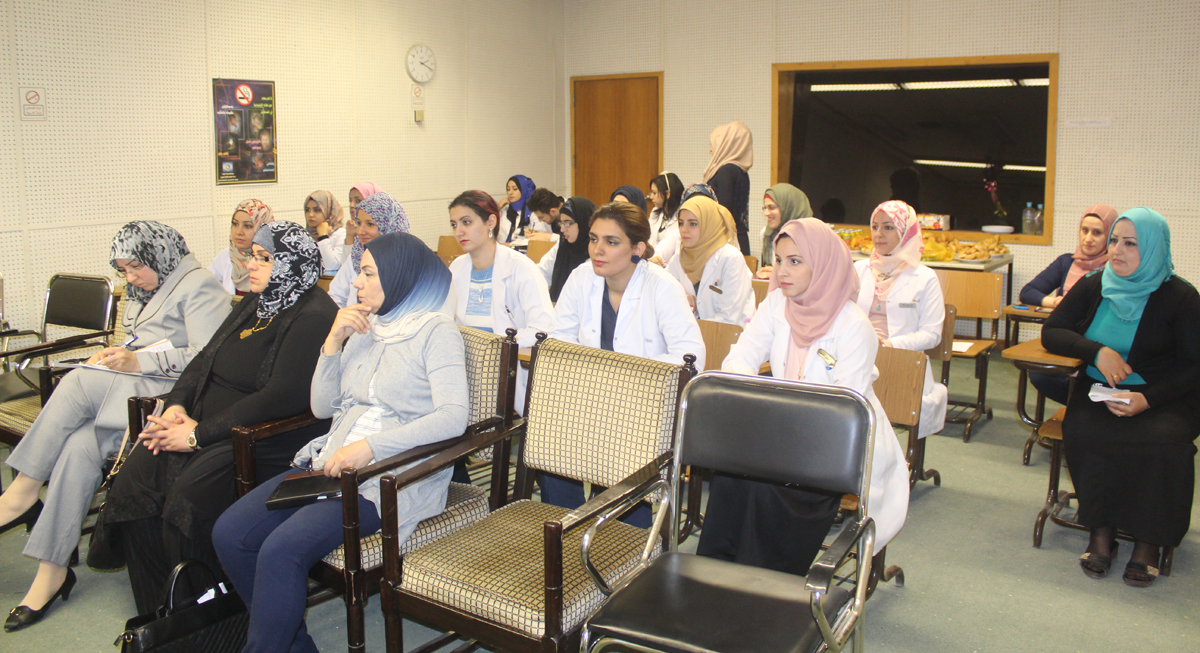
The Obstetrics and Gynaecology branch held a workshop on monitoring the pulse of the foetus during pregnancy and childbirth, which was attended by several specialist professors, the staff members of the branch and sixth year medics. The workshop began with Dr Sahar Hisham Abdul-Razzaq presenting a number of clinical cases with the assistance of Dr. Sahar Hassan Mshettat.
The head of the obstetrics and gynaecology, Dr Hala Abdul-Qadir, added that it was important to discuss topics related to maternal health, as it is a very sensitive subject with many complications, which makes the doctor's decision difficult.
Dr. Inas Adnan explained that it is vital that doctors become familiar with the latest developments in this field, including monitoring the foetus during childbirth and neonatal resuscitation, as well as the complications that the mother may suffer from during labour such as bleeding, hypertension and stroke. Dr Adnan outlined the importance of keeping up to date with these developments so that the doctor has an idea of all the options available when treating these cases.
A summary of the talking points from the workshop are as follows:
Discussion and presentation of unique case studies on monitoring the pulse of the foetus using the Data Show.
There is lack of technology available at the Al-Kadhimayn Hospital for monitoring the pulse of the foetus.
The skills laboratory and consultation centre require the necessary equipment to maintain a high standard of teaching and clinical training for both under- and post graduate students, such as hysteroscopes and cervical endoscopes.
The students requested a repeat of this workshop for students who were unable to attend due to prior engagements, and expressed their enthusiasm for similar clinical workshops in the future.
Dr Hala concluded the workshop stating that the continuation of such seminars and workshops is essential to raising the standard of the doctors and students.