

A Researcher from the Department of Microbiology Discusses the Role of IL-6, IL-33, and PTPRC Genes in the Response to Rheumatoid Arthritis Treatment
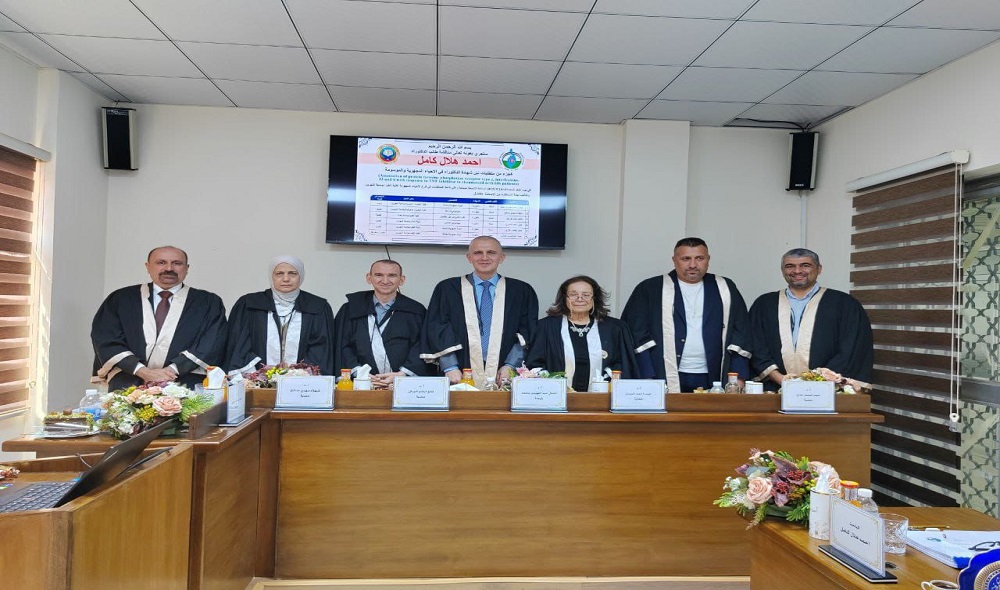
The Department of Microbiology at the College of Medicine, Al-Nahrain University, discussed the PhD dissertation of the student Ahmed Hilal Kamel, titled:
“Association of Protein Tyrosine Phosphatase Receptor Type C, Interleukins-33 and 6 with Response to TNF Inhibitor in Rheumatoid Arthritis Patients.”
The study aimed to evaluate the association between the genetic polymorphisms of PTPRC (rs10919563), IL-33 (rs16924159), and IL-6 (rs1800795) with the susceptibility to rheumatoid arthritis (RA) and the response to TNF inhibitor therapy. It also sought to compare the serum levels of these proteins between RA patients and healthy individuals, as well as to investigate their expression relationship with treatment response.
The study included 100 RA patients (50 responders and 50 non-responders to therapy) and 100 age- and sex-matched healthy controls. Genotyping of the studied variants was performed using quantitative PCR (TaqMan assay), and serum levels of PTPRC, IL-33, and IL-6 were measured using the ELISA technique. Clinical assessment was conducted using the Clinical Disease Activity Index (CDAI), along with measurement of serological markers including Rheumatoid Factor (RF), Anti-Cyclic Citrullinated Peptide (Anti-CCP), and C-Reactive Protein (CRP). Statistical analyses were performed to compare genotype and allele distributions, assess their association with disease susceptibility and treatment response, and evaluate diagnostic performance using ROC curves. The results demonstrated significantly higher serum concentrations of PTPRC, IL-33, and IL-6 in RA patients compared to healthy controls (p