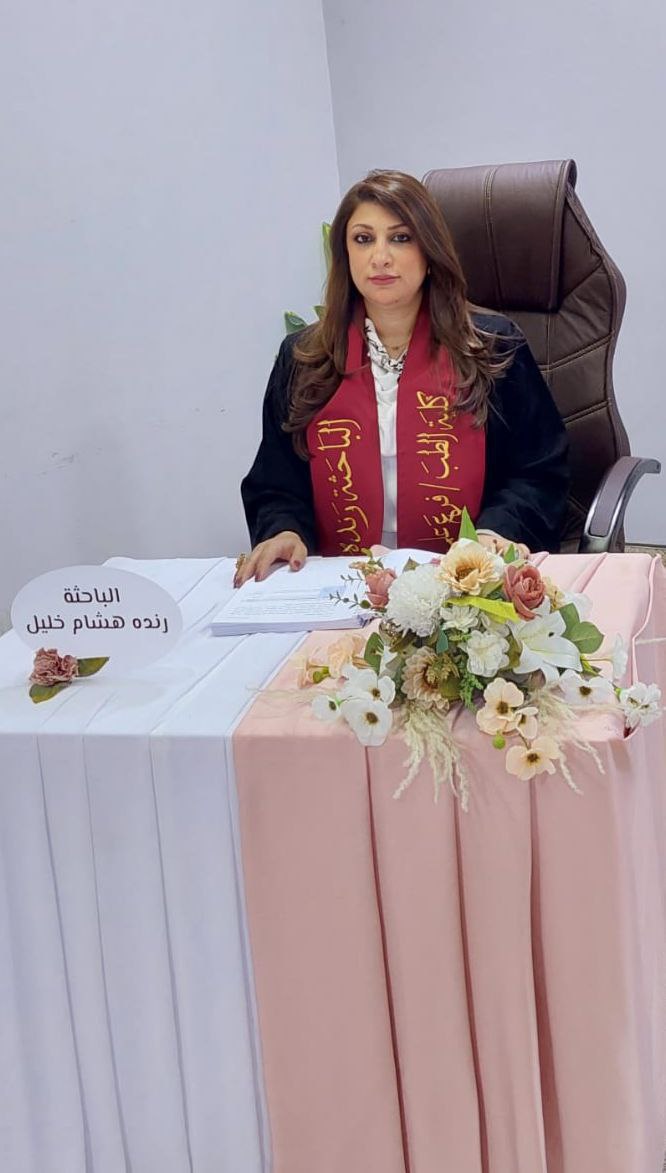



PhD Dissertation Discussion: **Ripasudil and *Cuscuta reflexa* in the Treatment of Testosterone-Induced Benign Prostatic Hyperplasia**
The Department of Pharmacology at Al-Nahrain College of Medicine discussed the doctoral dissertation of student Randa Hesham Khalil, entitled:
“Effects of Ripasudil and Ethanolic Extract of Cuscuta reflexa in Testosterone Induced Model of Benign Prostatic Hyperplasia in Rats.”
This study aimed to evaluate the therapeutic potential of Ripasudil and the ethanolic extract of Cuscuta reflexa, either alone or in combination with finasteride, in alleviating testosterone-induced benign prostatic hyperplasia (BPH) in male Wistar rats.
The results revealed a significant increase in the prostate index, elevated PSA levels, and characteristic histopathological changes indicating BPH after testosterone administration.
In addition, testosterone induced an increase in inflammatory markers (IL-6, IL-1β, TNF-α, TGF-β, NF-κB), oxidative stress (increased MDA and decreased GSH), and elevated ROCK1 expression.
However, intervention with Ripasudil and Cuscuta reflexa, either individually or in combination with finasteride, effectively reduced these changes, most likely through anti-inflammatory, antioxidant, and Rho-kinase inhibitory mechanisms.
The study concluded that administration of Ripasudil and the ethanolic extract of Cuscuta reflexa showed a protective effect against testosterone-induced BPH in rats, with results comparable to those of the standard treatment finasteride. This presents a novel therapeutic approach targeting inflammation, oxidative stress, and Rho-kinase pathways.
Examination Committee:
Prof. Dr. Ahmed Rahma Abu-Rghaif – Chair
Prof. Dr. Ban Jumaa Qasim – Member
Prof. Dr. Haider Faisal Ghazi – Member
Assist. Prof. Dr. Mohammed Qasim Yahya – Member
Assist. Prof. Dr. Foad Kadhem Kati’ – Member
Prof. Dr. Adeeb Ahmed Kadhem – Member & Supervisor
The dissertation was accepted with distinction.
Media and Government Communication Division
College of Medicine – Al-Nahrain University