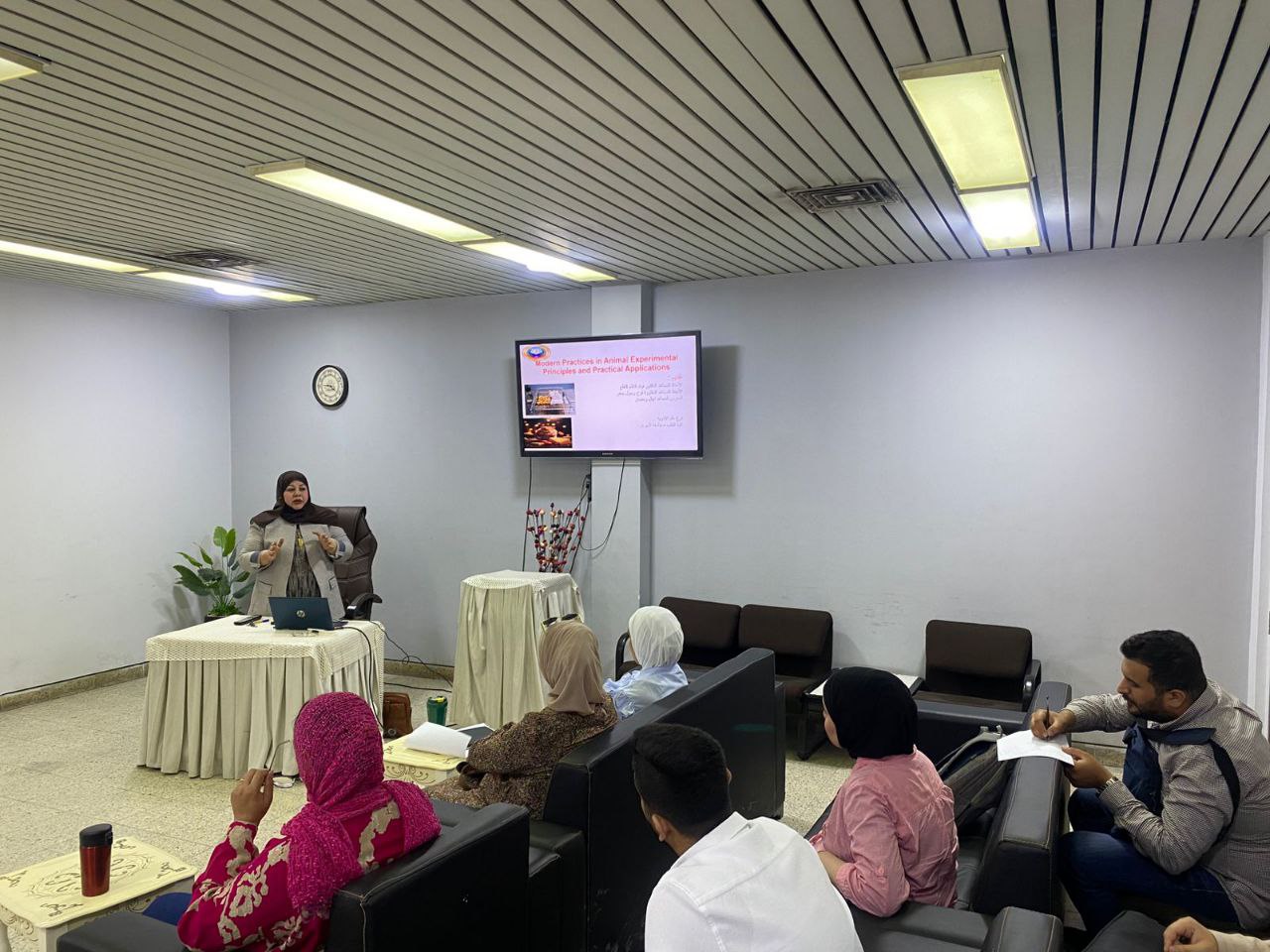


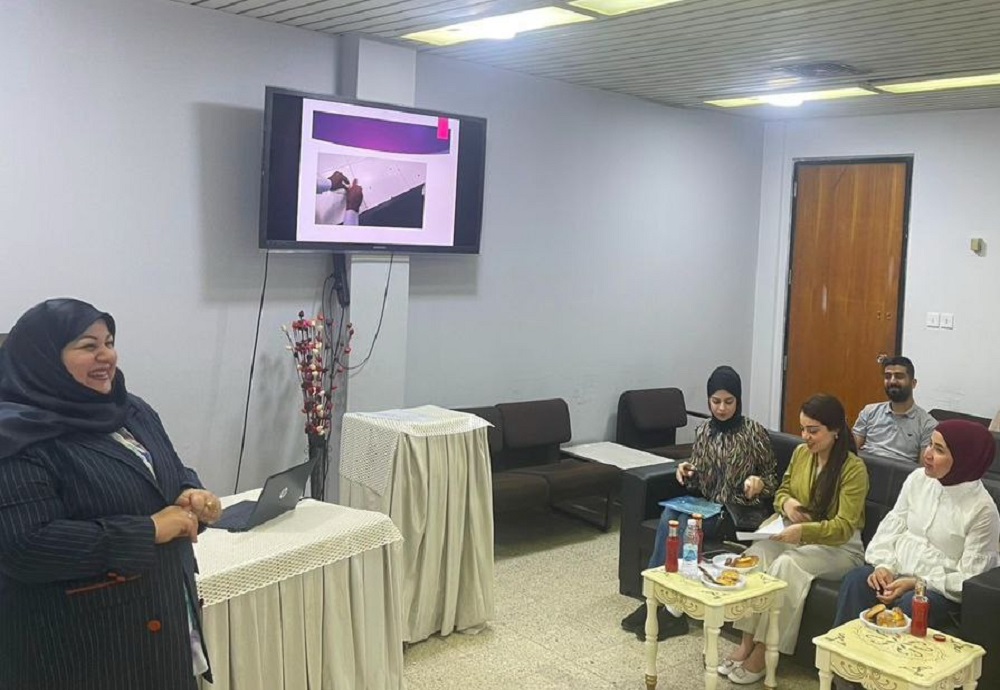
An in-person training course was held at the Department of Pharmacology on the topic of **modern practices in animal experimental principles and their practical applications**.
Under the patronage of the esteemed Dean of the College of Medicine / Al-Nahrain University, Professor Dr. Anees Khalil Nael, the Department of Pharmacology organized an in-person training course entitled:
"Modern Practices in Animal Experimental Principle and Practical Applications"
The course was presented by the following faculty members:
Assist. Prof. Dr. Fouad Kazem Kata’
Assist. Prof. Dr. Farah Rasool Jaafar
Lect. Nihal Ramadan Huairif
The course was held in the seminar hall of the Department of Pharmacology from May 7 to May 19, 2025, at 10:30 AM daily. The course aimed to equip participants with both theoretical knowledge and practical skills essential for conducting animal experiments in a scientific and ethical manner, in accordance with internationally recognized standards. It also aimed to deepen participants’ understanding of the fundamental principles of animal research, including experimental techniques, data quality assurance, and adherence to ethical considerations, with a particular focus on the 3Rs principle (Replacement, Reduction, and Refinement). The continuous demand for medical research today heavily relies on animal experimentation in the hope of achieving new scientific advancements. Therefore, various laboratory animal models are used, particularly in biomedical research and educational settings. The importance of the course topic also stemmed from its focus on different techniques of blood sample collection from laboratory animals in scientific experiments. These techniques are crucial for biomedical researchers to assess therapeutic responses and confirm the effectiveness of the model in studying physiological processes and treatment outcomes. Additionally, the course highlighted the role of such techniques in developing innovative industrial applications in the pharmaceutical industry and emphasized their importance in obtaining accurate results. The training also served as a practical learning opportunity for both undergraduate and postgraduate students. The course was attended by a group of faculty members, postgraduate students, and professionals working in the field.