

Al-Nahrain University College of Medicine Discusses a PhD Dissertation on Promising Biomarkers for the Early Diagnosis of Myocardial Infarction
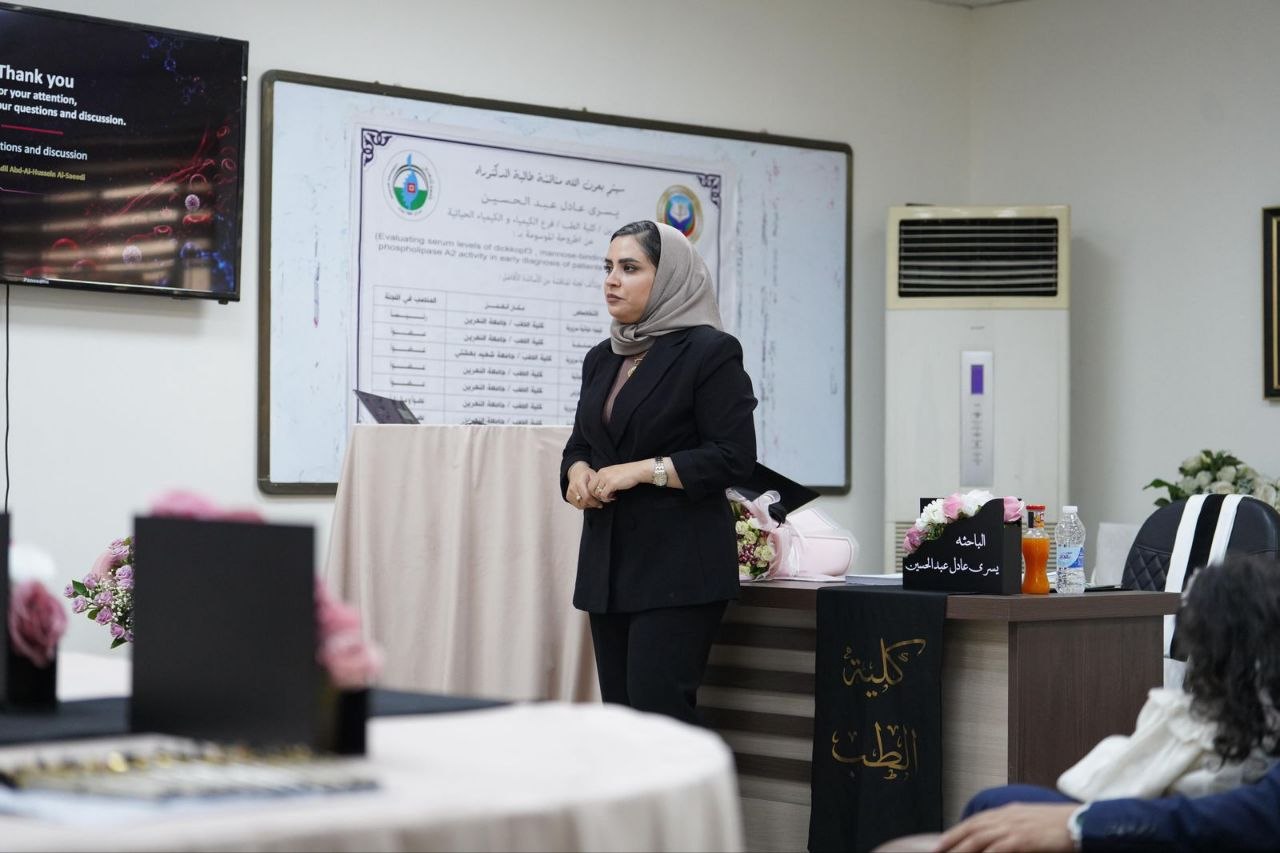
On Monday, August 31, 2026, the College of Medicine at Al-Nahrain University, Department of Chemistry and Biochemistry, held the PhD dissertation defense of doctoral candidate Yusra Adel Abdul-Hussein Al-Saidi, entitled:
“Evaluation of Serum Levels of Dickkopf-3, Mannose-Binding Lectin-2 (MBL-2), β-Catenin, and Phospholipase A₂ in Early Diagnosis of Patients with Myocardial Infarction.”
The study aimed to evaluate serum levels of DKK3, MBL-2, β-catenin, and Lp-PLA₂ in patients with myocardial infarction and to investigate the changes in these biomarkers during the early phase of infarction. It also sought to compare their levels among patients with ST-segment elevation myocardial infarction (STEMI), non-ST-segment elevation myocardial infarction (NSTEMI), and healthy controls, as well as to assess their diagnostic performance for the early diagnosis of myocardial infarction using Receiver Operating Characteristic (ROC) curve analysis.
The study results demonstrated a significant increase in DKK3 levels among patients with myocardial infarction compared with the healthy control group, whereas β-catenin and Lp-PLA₂ levels were significantly decreased in patients. In contrast, MBL-2 showed no statistically significant differences among the study groups, suggesting limited diagnostic value within the scope of this study. Furthermore, none of the four biomarkers showed significant differences between STEMI and NSTEMI patients.
ROC curve analysis revealed that β-catenin was the best-performing biomarker among those investigated, with an area under the curve (AUC) of 0.850, a sensitivity of 80.0%, and a specificity of 81.0%. DKK3 also demonstrated good diagnostic performance, with an AUC of 0.765, a sensitivity of 82.2%, and a specificity of 61.9%.
The study concluded that elevated DKK3 and decreased β-catenin levels may reflect an early dysregulation of the Wnt/β-catenin signaling pathway in patients with myocardial infarction. The findings also suggest that DKK3 and β-catenin, particularly β-catenin, may serve as promising adjunctive biomarkers for the early diagnosis of myocardial infarction alongside conventional cardiac biomarkers. Lp-PLA₂ demonstrated a significant alteration in patients, whereas MBL-2 showed limited diagnostic value. These findings warrant further large-scale studies to confirm their potential clinical applicability.
The dissertation defense also featured distinguished scientific participation by Assistant Professor Dr. Zahraa Hassan Shaheed Al-Wardi, a specialist in Clinical Biochemistry at the College of Medicine, Shahid Beheshti University, Tehran, Islamic Republic of Iran, who served as a member of the dissertation defense committee. She participated remotely via electronic communication and contributed scientific insights and valuable comments that enriched the discussion and contributed to the evaluation of the dissertation findings.
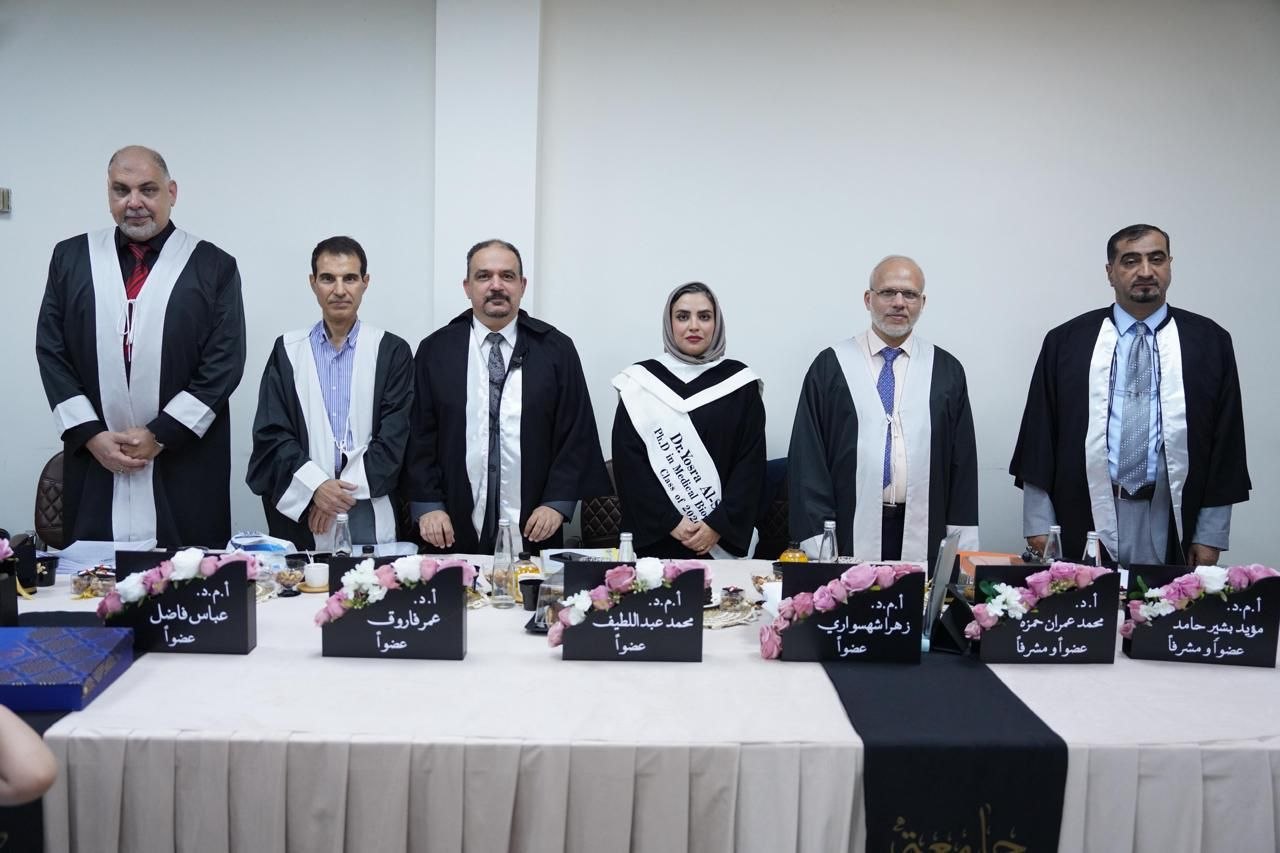
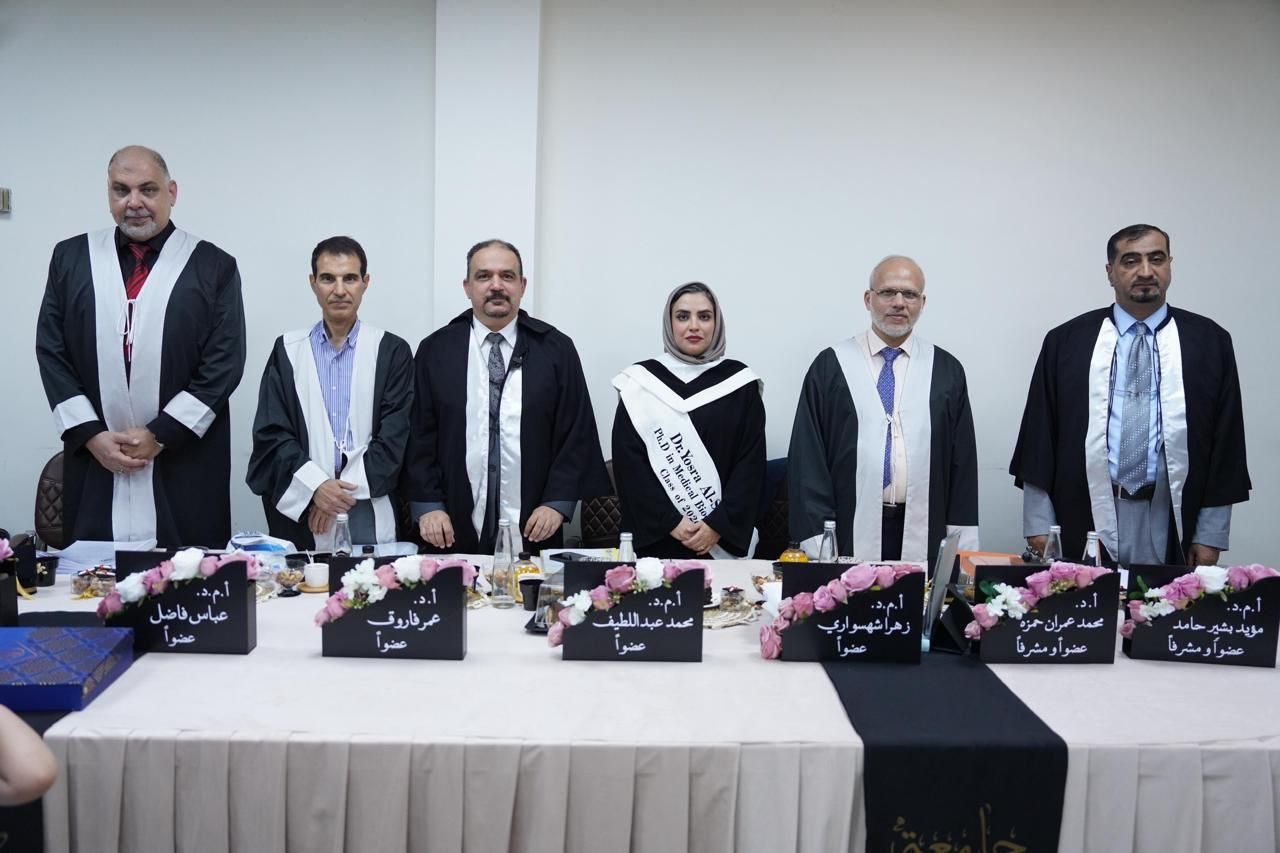
Dissertation Defense Committee
-
Professor Dr. Omar Farouq Abdul-Rashid – Chair
-
Assistant Professor Dr. Abbas Fadhil Abdul-Wahhab – Member
-
Assistant Professor Dr. Zahraa Shahsuwari – Member
-
Assistant Professor Dr. Hassan Hussein Taha – Member
-
Assistant Professor Dr. Mohammed Abdul-Latif Abdul-Ali – Member
-
Professor Dr. Mohammed Imran Hamza – Member and Supervisor
-
Assistant Professor Dr. Moayad Bashir Hamed – Member and Supervisor
The dissertation was successfully approved with a grade of Excellent.
Media and Government Communication Division
College of Medicine – Al-Nahrain University