

Master’s Thesis at Al-Nahrain College of Medicine Investigates the Efficacy of Bacteriocin Against MRSA and Biofilm Formation
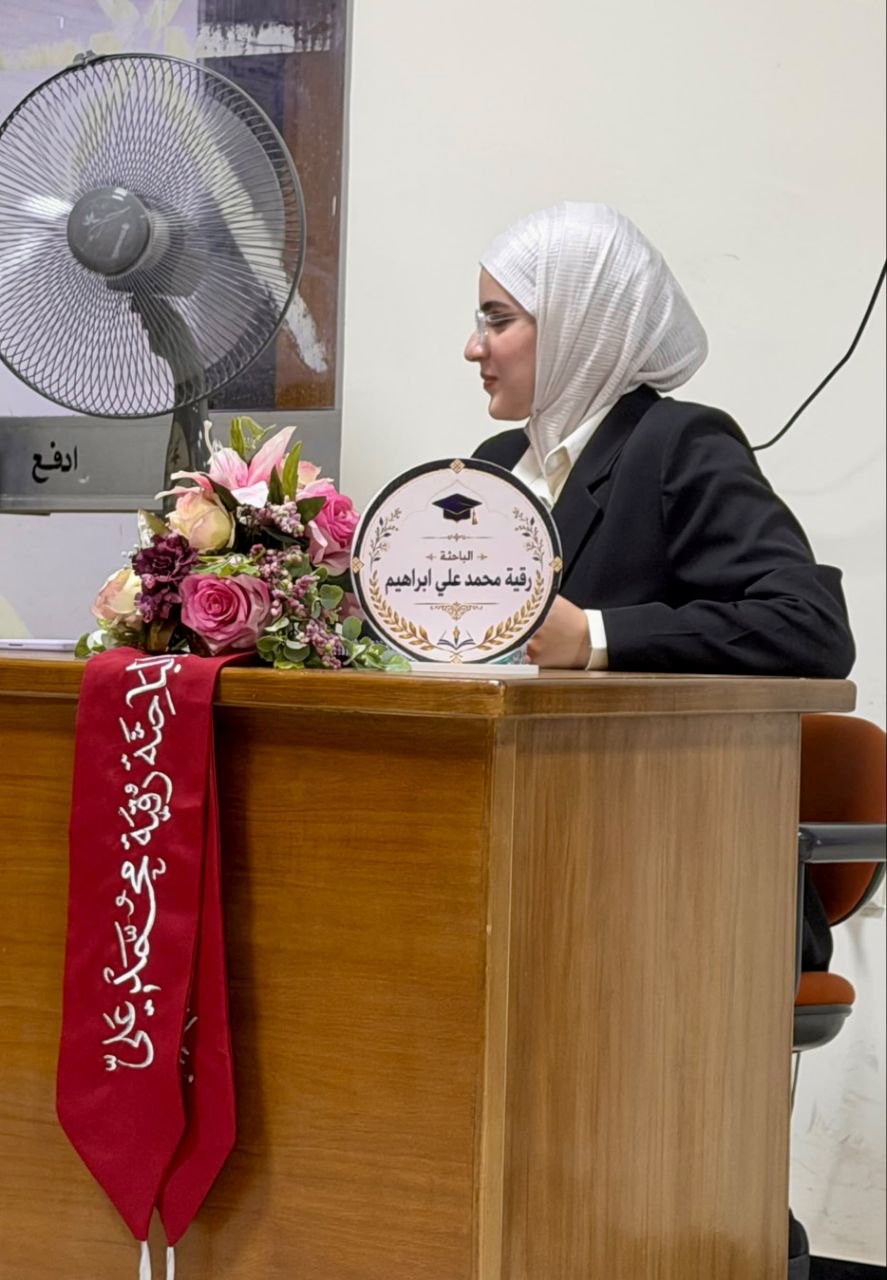
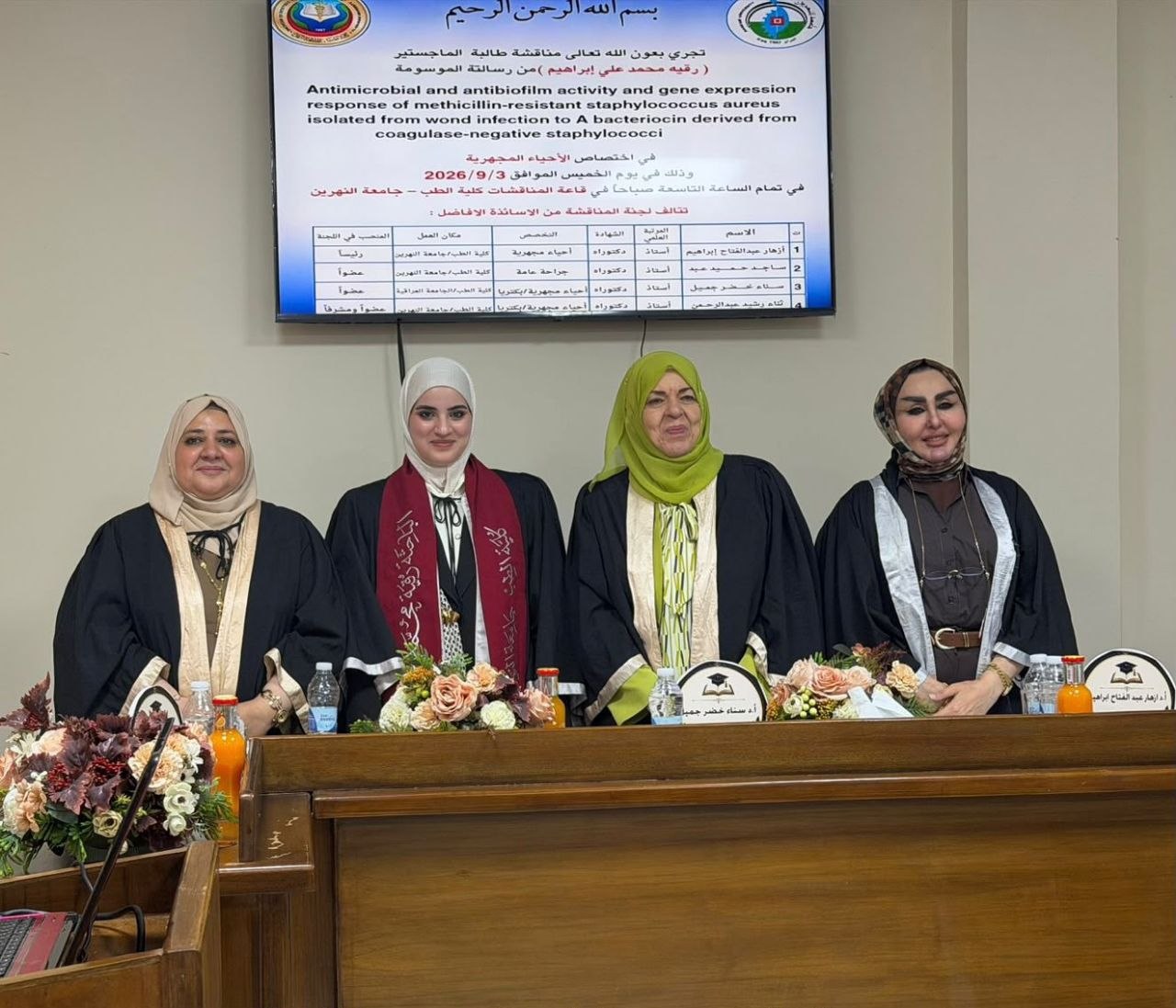
On Thursday, September 3, 2026, a master’s thesis defense was held at the College of Medicine, Al-Nahrain University, Department of Medical Microbiology, for master’s student Ruqaia Mohammed Ali Ibrahim, whose thesis was entitled:
“Antimicrobial and antibiofilm activity, and gene expression response of methicillin-resistant Staphylococcus aureus isolated from wound infections to A bacteriocin derived from coagulase-negative Staphylococci.”
The study aimed to determine the prevalence of methicillin-resistant Staphylococcus aureus (MRSA) in wound and burn infections; identify the antimicrobial susceptibility pattern (antibiogram) of MRSA isolates; assess their biofilm-forming capacity; investigate bacteriocin production by coagulase-negative staphylococci (CoNS); and evaluate the antibacterial and antibiofilm effects of the bacteriocin against MRSA isolates at both phenotypic and gene-expression levels.
The results showed that, among 125 wound swabs, 88 samples (70.4%) exhibited positive bacterial growth. Staphylococcus aureus was the most prevalent isolate, recovered from 28 samples (31.8% of positive cultures), with a very high MRSA prevalence of 92.9%, as determined by cefoxitin resistance. All 28 S. aureus isolates (100%) were confirmed to be biofilm producers.
Among the 12 CoNS isolates recovered, S. epidermidis was the most prevalent species (50%), followed by S. haemolyticus (33.3%) and S. hominis (16.7%). Screening of 20 CoNS isolates for bacteriocin production identified two confirmed producers belonging to S. epidermidis and S. hominis.
Partial purification by ammonium sulfate precipitation demonstrated optimal bacteriocin activity at 70% saturation for S. epidermidis and 60% saturation for S. hominis, with protein concentrations of 0.23 mg/mL and 0.77 mg/mL, respectively. Due to its higher protein yield and greater antimicrobial activity, the S. hominis bacteriocin was selected for further characterization.
The S. hominis bacteriocin demonstrated thermal stability up to 80°C and pH stability between pH 4 and pH 6. The antibacterial assay demonstrated a concentration-dependent inhibitory effect against S. aureus, achieving a maximum inhibition rate of 93.12% at full concentration. Its bacteriostatic mode of action was confirmed through subculturing on blood agar and mannitol salt agar.
Furthermore, the bacteriocin exhibited significant antibiofilm activity, inhibiting biofilm formation by S. aureus by 90.90% compared with the untreated control group.
Conventional PCR was used to detect the icaD gene in 10 randomly selected S. aureus isolates. All isolates showed positive amplification (10/10, 100%) with a specific band size of 212 base pairs (bp), confirming a strong genetic capacity for biofilm formation among the studied isolates.
RT-PCR analysis of four selected isolates revealed a novel finding, namely a consistent increase in icaD gene expression following bacteriocin treatment, despite a simultaneous and substantial inhibition of biofilm formation at the phenotypic level.
All S. aureus isolates recovered from wound and burn infections were confirmed biofilm producers.
These findings support that the partially purified S. hominis bacteriocin extract possesses potent antibacterial and antibiofilm activities against the studied isolates, with a bacteriostatic mode of action. Molecular analysis confirmed the universal presence of the icaD gene among the tested isolates, while RT-PCR revealed increased icaD gene expression following bacteriocin treatment. This finding suggests a novel post-transcriptional mechanism underlying the antibiofilm activity of the bacteriocin.
The findings highlight the potential of S. hominis-derived bacteriocins as promising alternative therapeutic agents for the management of MRSA-associated wound and burn infections.
Thesis Defense Committee
-
Prof. Dr. Azhar Abdul-Fattah Ibrahim – Chair
-
Prof. Dr. Sajid Hamid Eid – Member
-
Prof. Dr. Sanaa Khudr Jameel – Member
-
Prof. Dr. Thanaa Rashid Abdul-Rahman – Member and Supervisor
The thesis was successfully approved with a grade of Excellent.
Media and Government Communication Division
College of Medicine – Al-Nahrain University