

Master’s Thesis Defense at the College of Medicine, Al-Nahrain University Examines the Green Synthesis of Selenium Oxide Nanoparticles and Their Protective Effect Against UV-Induced Genetic Damage
Master’s Thesis Defense at the College of Medicine, Al-Nahrain University Examines the Green Synthesis of Selenium Oxide Nanoparticles and Their Protective Effect Against UV-Induced DNA Damage
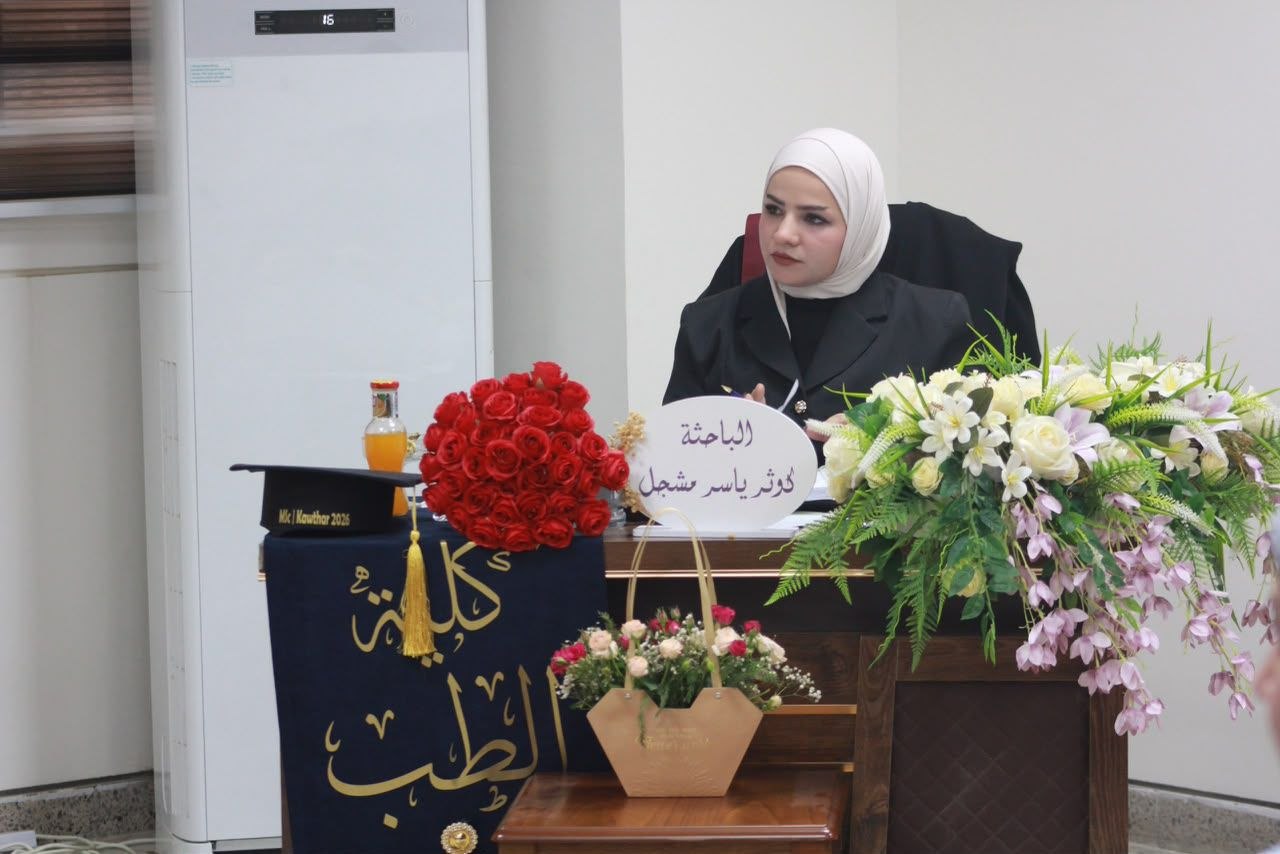
On Sunday, August 9, 2026, the College of Medicine, Al-Nahrain University, Department of Physiology and Medical Physics, held the defense of the Master’s thesis submitted by postgraduate student Kawthar Yasser Mishjal, entitled:
Green Synthesis of Selenium Oxide Nanoparticles from Clove (Syzygium aromaticum) and Evaluate Their Reducing Effect on DNA Fragmentation Mediated by Ultraviolet Radiation in Living Cells
The study aimed to evaluate the potential protective and therapeutic effects of clove (Syzygium aromaticum) extract and biologically synthesized selenium oxide nanoparticles (SeO NPs) against ultraviolet (UV) radiation-induced genotoxicity in living cells.
The findings demonstrated the successful green synthesis of selenium oxide nanoparticles using sodium selenite and methanolic clove extract. Phytochemical analysis by Gas Chromatography–Mass Spectrometry (GC-MS) revealed an extraction yield of 13.33%, with eugenol and its derivatives constituting the largest proportion at 82.55%.
Characterization analyses, including UV-Visible spectroscopy (UV-Vis), Fourier Transform Infrared Spectroscopy (FTIR), X-Ray Diffraction (XRD), Field Emission Scanning Electron Microscopy (FE-SEM), Energy-Dispersive X-ray Spectroscopy (EDX), and Zeta Potential analysis, confirmed the formation of stable, spherical nanoparticles with a crystalline structure and an average particle size of 44.8 nm. The nanoparticles also demonstrated excellent stability, with a zeta potential of −36.53 mV.
The biological findings, obtained from laboratory mice divided into 11 experimental groups, using the Alkaline Comet Assay, showed that pretreatment with selenium oxide nanoparticles provided significantly greater protection against UV-induced DNA damage compared with post-exposure treatment (P ≤ 0.01). The highest ant-genotoxic effect was observed following 15 minutes of UV exposure. This effect was attributed to the high eugenol content and the unique physicochemical properties of the nanoparticles, which may enhance their bioavailability and cellular delivery.
These findings support the promising preventive and therapeutic potential of biologically synthesized selenium oxide nanoparticles against genotoxicity and oxidative stress, highlighting their potential as a natural candidate for mitigating the adverse biological effects associated with ultraviolet radiation exposure.
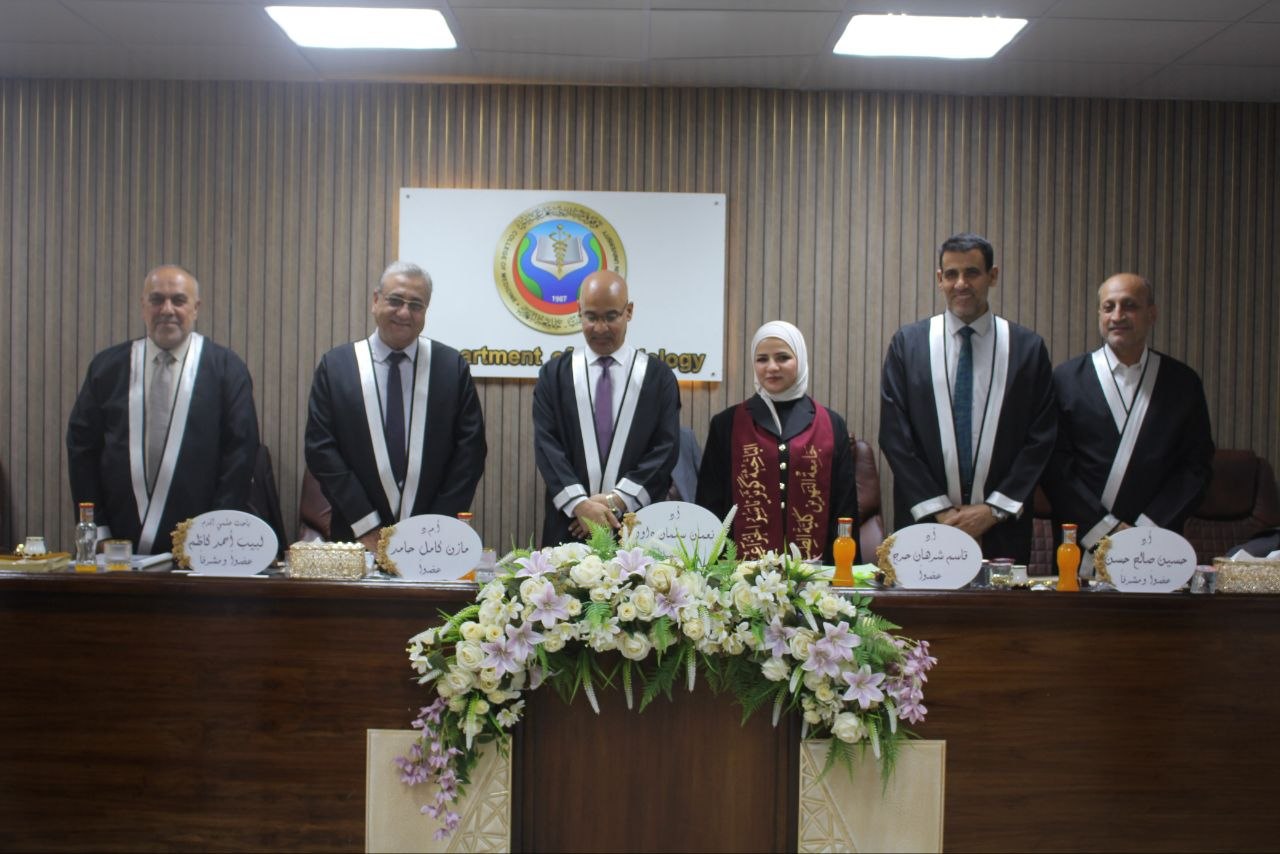
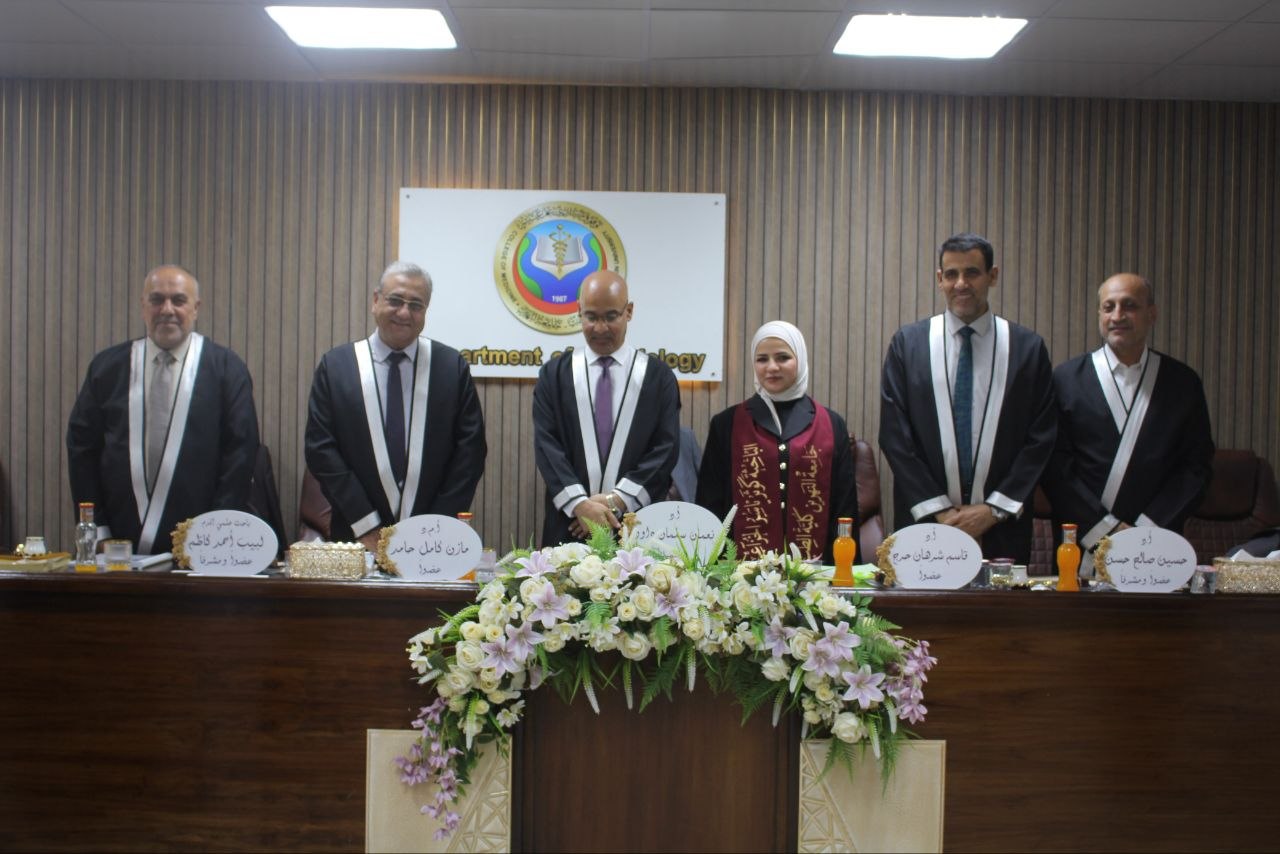
Thesis Defense Committee
The discussion committee consisted of:
-
Prof. Dr. Noman Salman Dawood – Chair
-
Prof. Dr. Qasim Sharhan Haraj – Member
-
Asst. Prof. Dr. Mazin Kamel Hamid – Member
-
Prof. Dr. Hussein Saleh Hassan – Member and Supervisor
-
Asst. Prof. Dr. Labib Ahmed Kadhim – Member and Supervisor
The thesis was successfully approved with an “Excellent” grade.
Government Media and Communications Division
College of Medicine – Al-Nahrain University