

Master’s Thesis Discussion at Al-Nahrain University College of Medicine Examines the Anti-Angiogenic Effects of Green Walnut Husk
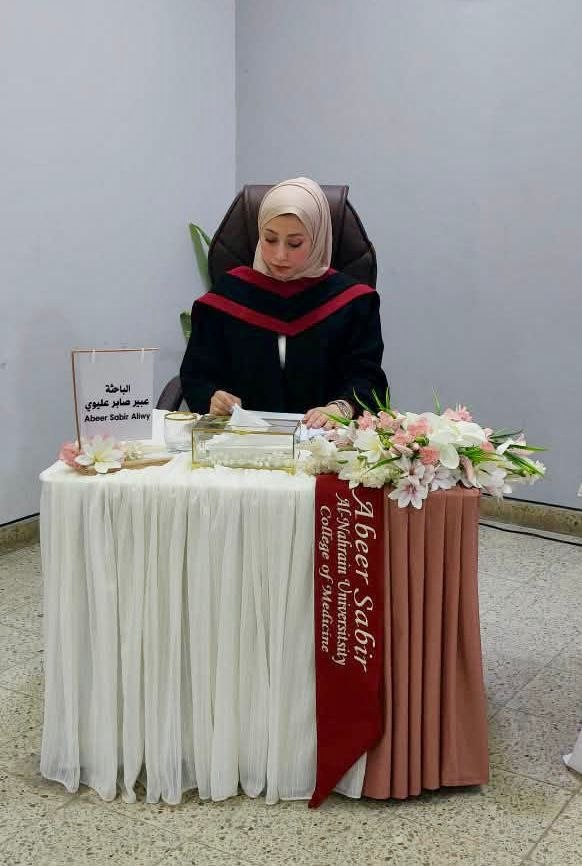
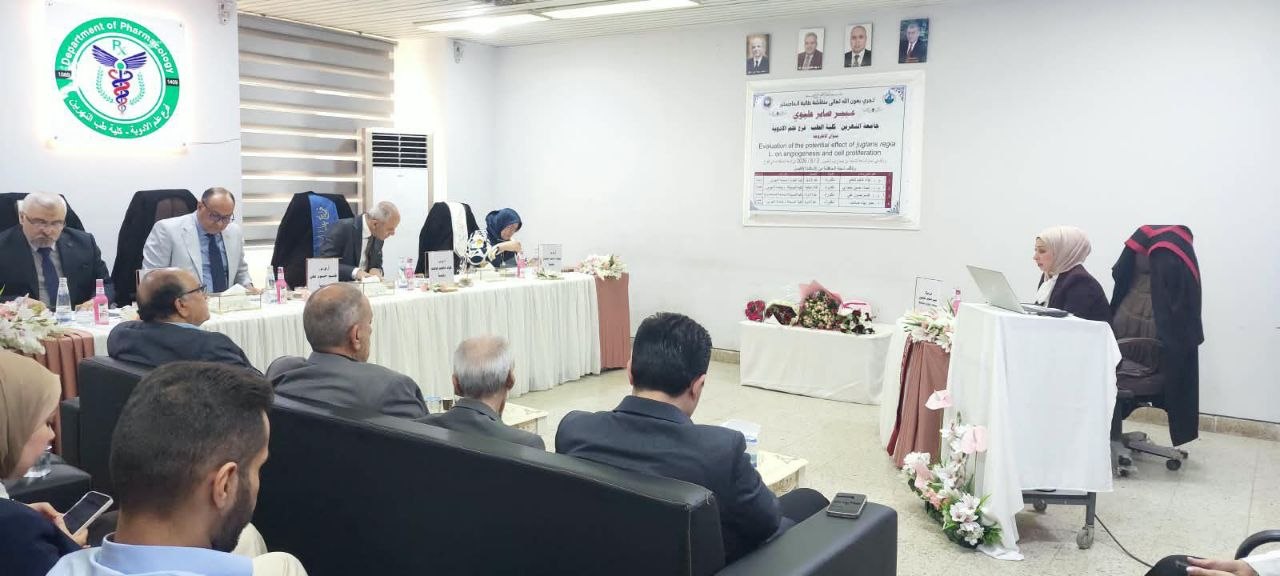
A Master’s thesis by Abeer Saber Alawi was discussed on Thursday, September 3, 2026, at the Department of Pharmacology, College of Medicine, Al-Nahrain University. The thesis was entitled:
“Evaluation of the Potential Effect of Juglans regia L. on Angiogenesis and Cell Proliferation”
The study aimed to evaluate the anti-angiogenic activity of the green husk extract of Juglans regia L., investigate its effect on the gene expression of vascular endothelial growth factor (VEGF), and assess its anti-proliferative and antioxidant activities. The study also investigated its phytochemical characteristics, in addition to evaluating its predicted pharmacokinetic and toxicity profiles, metabolic pathways, and molecular interactions using in silico approaches.
The results demonstrated that the ethanolic extract of Juglans regia L. green husk was the most effective in inhibiting angiogenesis compared with the other extracts. In the rat aortic ring assay, the ethanolic extract achieved 52.92% inhibition of microvessel growth during the preliminary screening phase.
The extract also exhibited concentration-dependent anti-angiogenic activity, with the percentage inhibition of microvessel growth increasing from 1.50 ± 1.33% at 6.25 µg/mL to 79.00 ± 1.16% at 100 µg/mL, with an IC₅₀ of approximately 37 µg/mL.
In the chick chorioallantoic membrane (CAM) assay, treatment with the ethanolic extract resulted in a significant reduction in vascular branching. The mean number of blood vessels decreased from 16.83 ± 5.46 before treatment to 5.83 ± 1.17 after treatment, corresponding to an approximately 65.4% reduction, with a statistically significant difference (P = 0.007).
In the MTT assay using human umbilical vein endothelial cells (HUVECs), the ethanolic extract demonstrated marked concentration-dependent anti-proliferative activity. Cell proliferation inhibition reached 88% at 100 µg/mL, with an IC₅₀ of approximately 49.2 µg/mL.
The extract also demonstrated antioxidant activity in the DPPH assay, achieving 83.7% free-radical scavenging activity, with an IC₅₀ of approximately 23.3 µg/mL.
RT-qPCR analysis revealed a decrease in VEGF gene expression following treatment with the extract, supporting its potential role in inhibiting angiogenic signaling pathways.
Furthermore, HPLC analysis confirmed the presence of rutin in the extract, while FTIR analysis revealed characteristic components and functional groups associated with phenolic and flavonoid compounds.
Molecular docking analysis demonstrated favorable molecular interactions between quercetin, the aglycone form of rutin, and VEGF-A, providing computational support for a potential mechanism underlying the extract’s anti-angiogenic activity.
In addition, in silico analyses of the pharmacokinetic and toxicity profiles indicated acceptable predicted pharmacological and toxicity characteristics for quercetin. The Meteor Nexus analysis predicted that quercetin may undergo hydroxylation followed by glucuronidation, with no toxic metabolites being predicted.
Overall, these findings support the promising anti-angiogenic, anti-proliferative, and antioxidant activities of the ethanolic extract of Juglans regia L. green husk, together with its ability to reduce VEGF gene expression. The combined experimental, phytochemical, and computational findings highlight the potential of green walnut husk as a natural source of bioactive compounds with anti-angiogenic properties.
The study recommends further research to isolate and characterize the active compounds, elucidate their mechanisms of action, and more extensively evaluate their efficacy and safety.
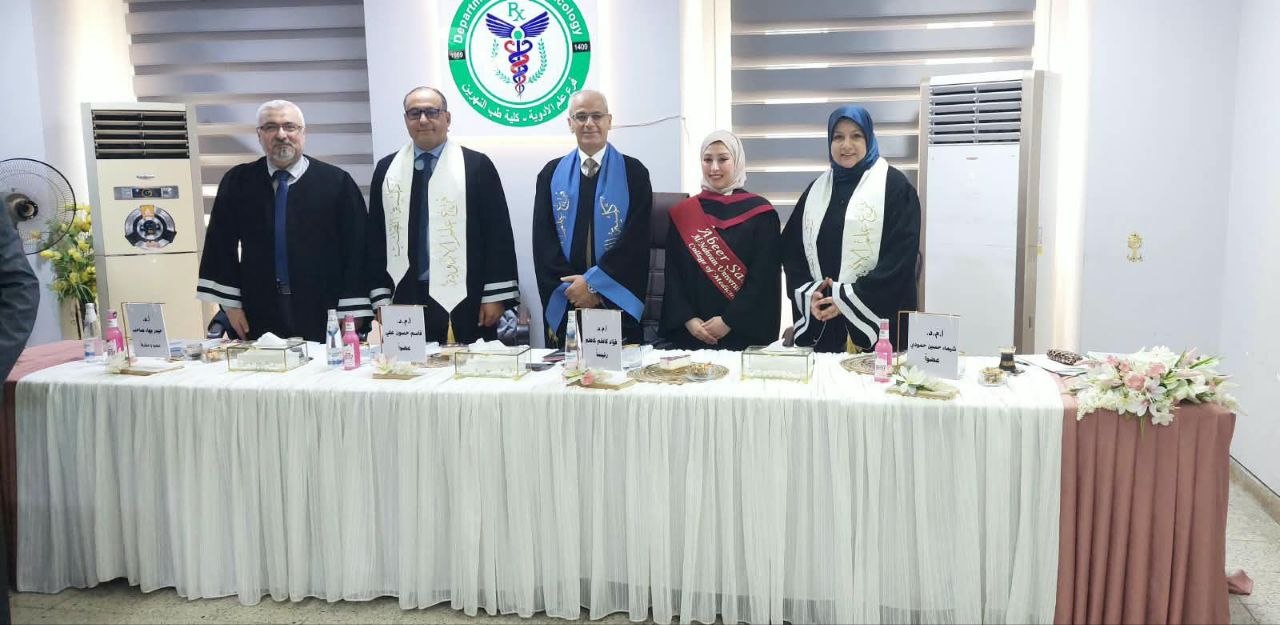
Thesis Discussion Committee
-
Assist. Prof. Dr. Fouad Kadhim Kataa – Chair
-
Assist. Prof. Dr. Shaimaa Hussein Hamoudi – Member
-
Prof. Dr. Qasim Hassoun Ali – Member
-
Prof. Dr. Haider Bahaa Sahib – Member and Supervisor
The thesis was successfully accepted with an Excellent grade.
Media and Government Communication Division
College of Medicine – Al-Nahrain University