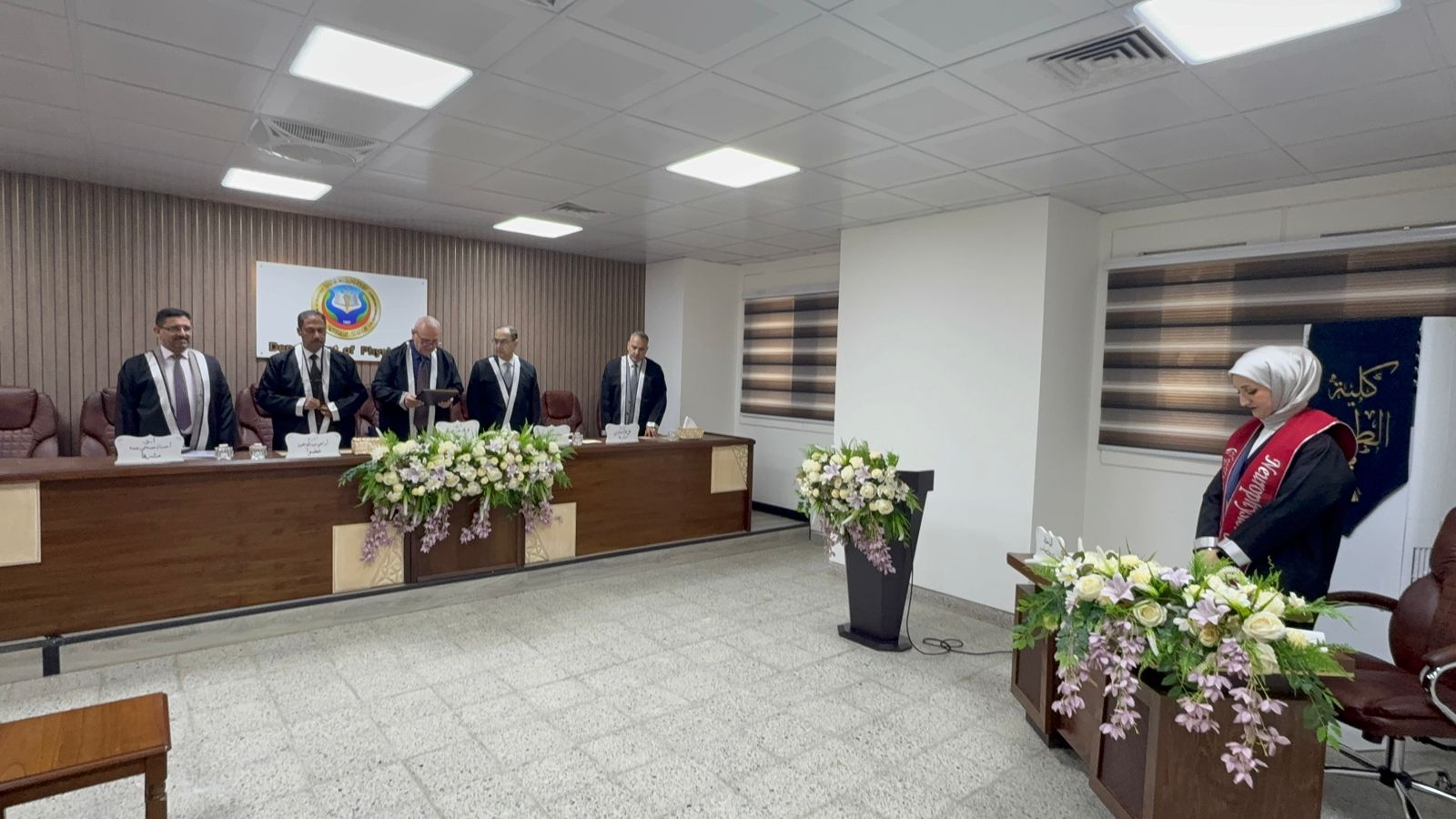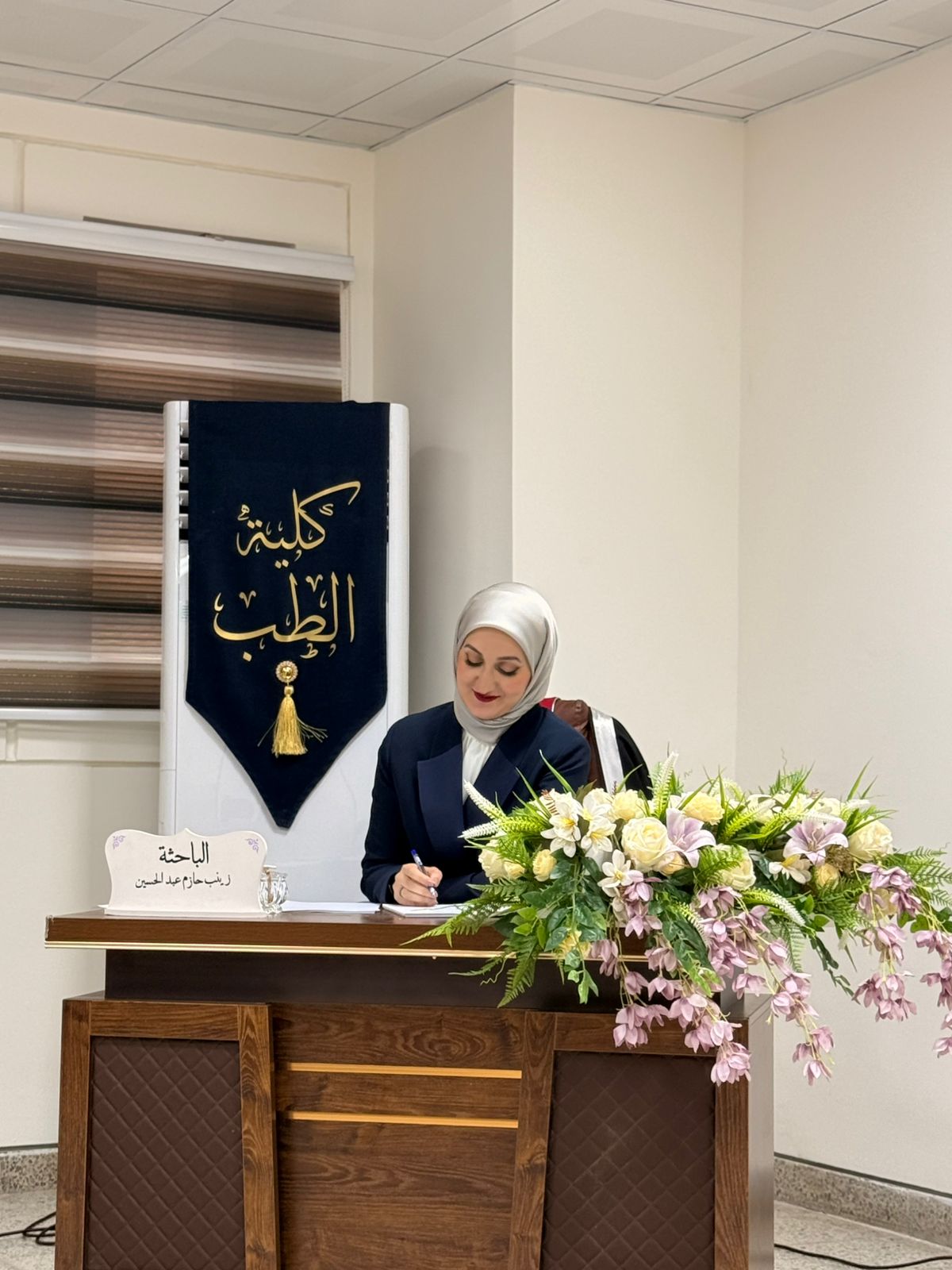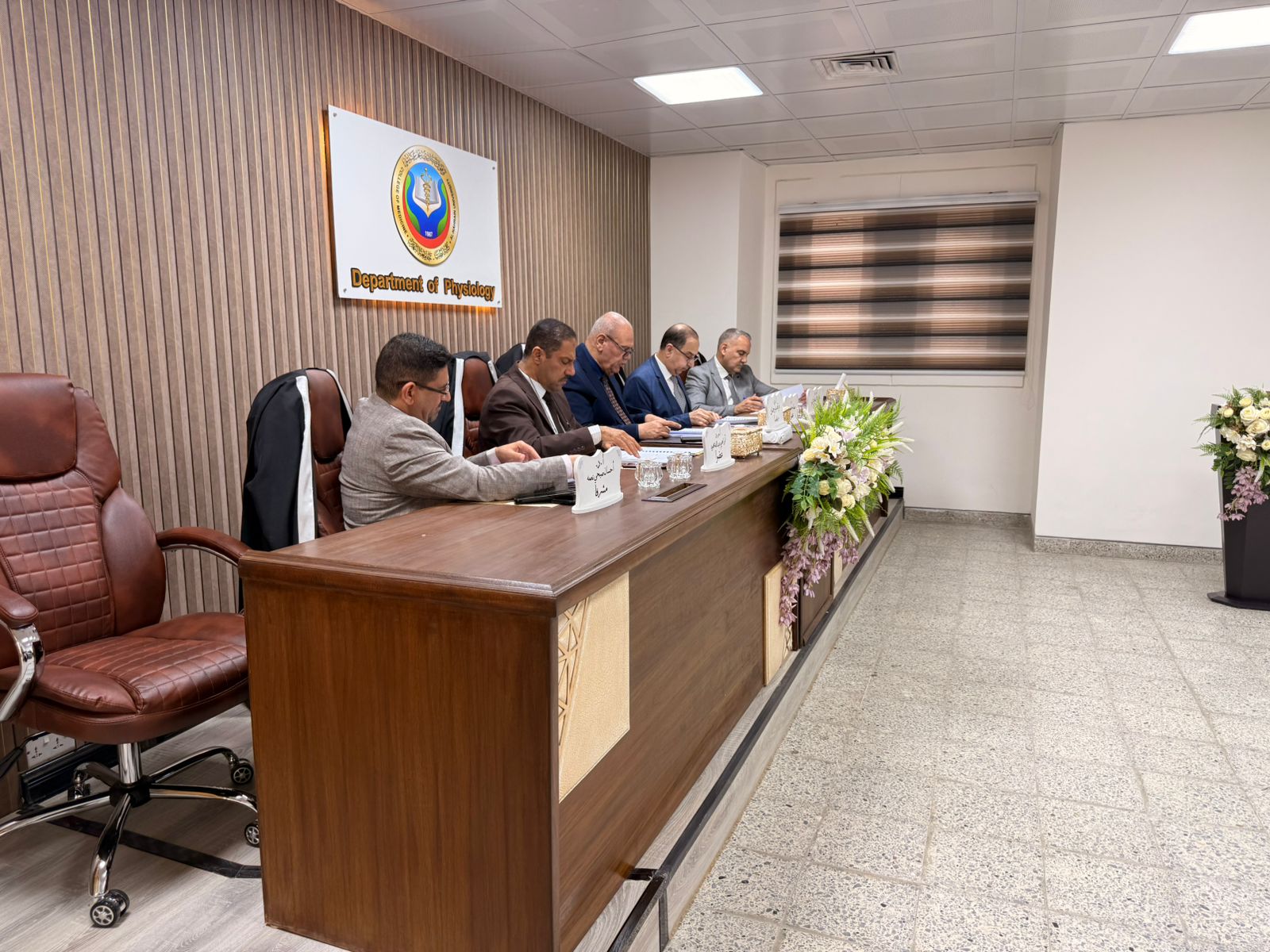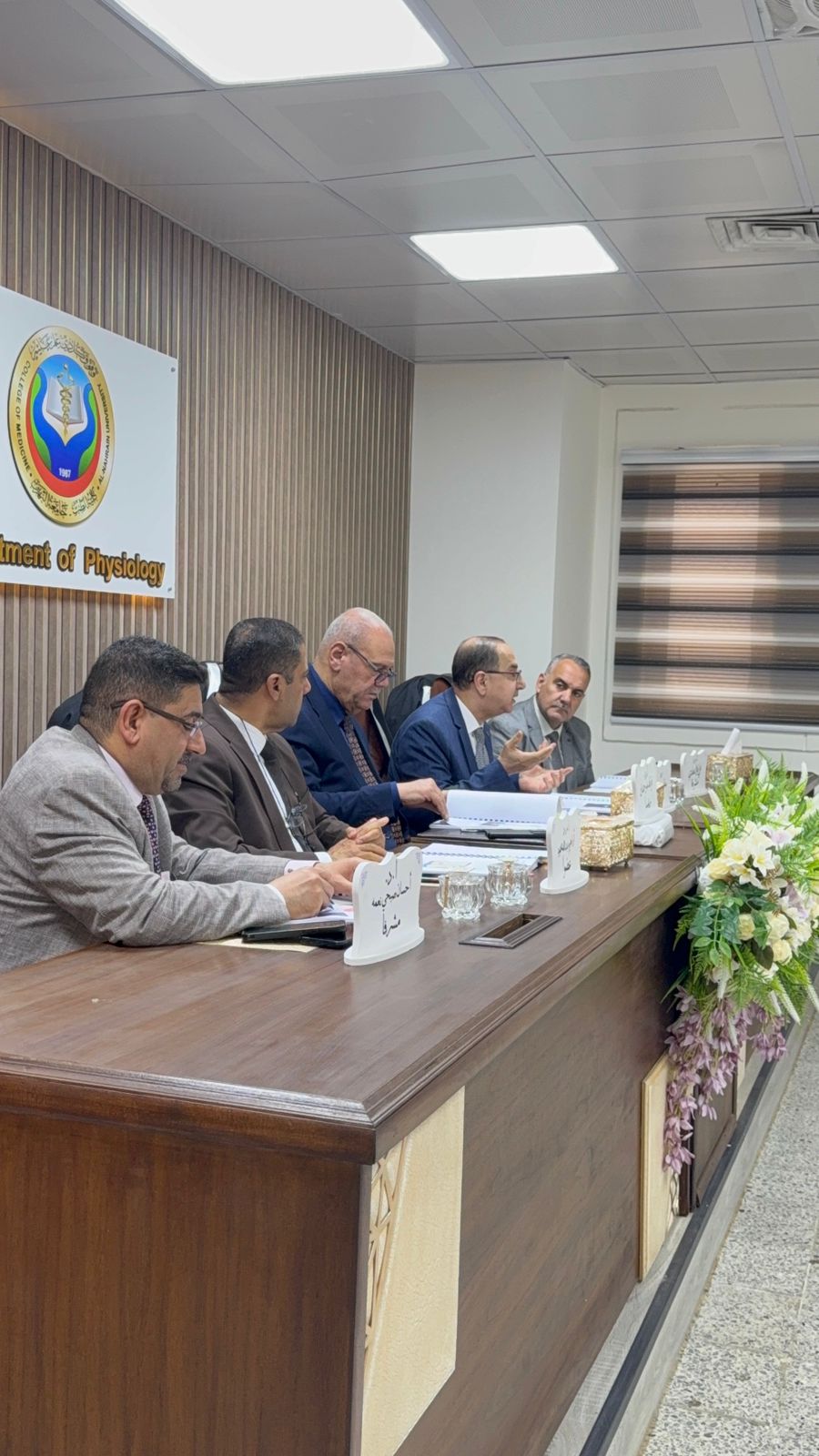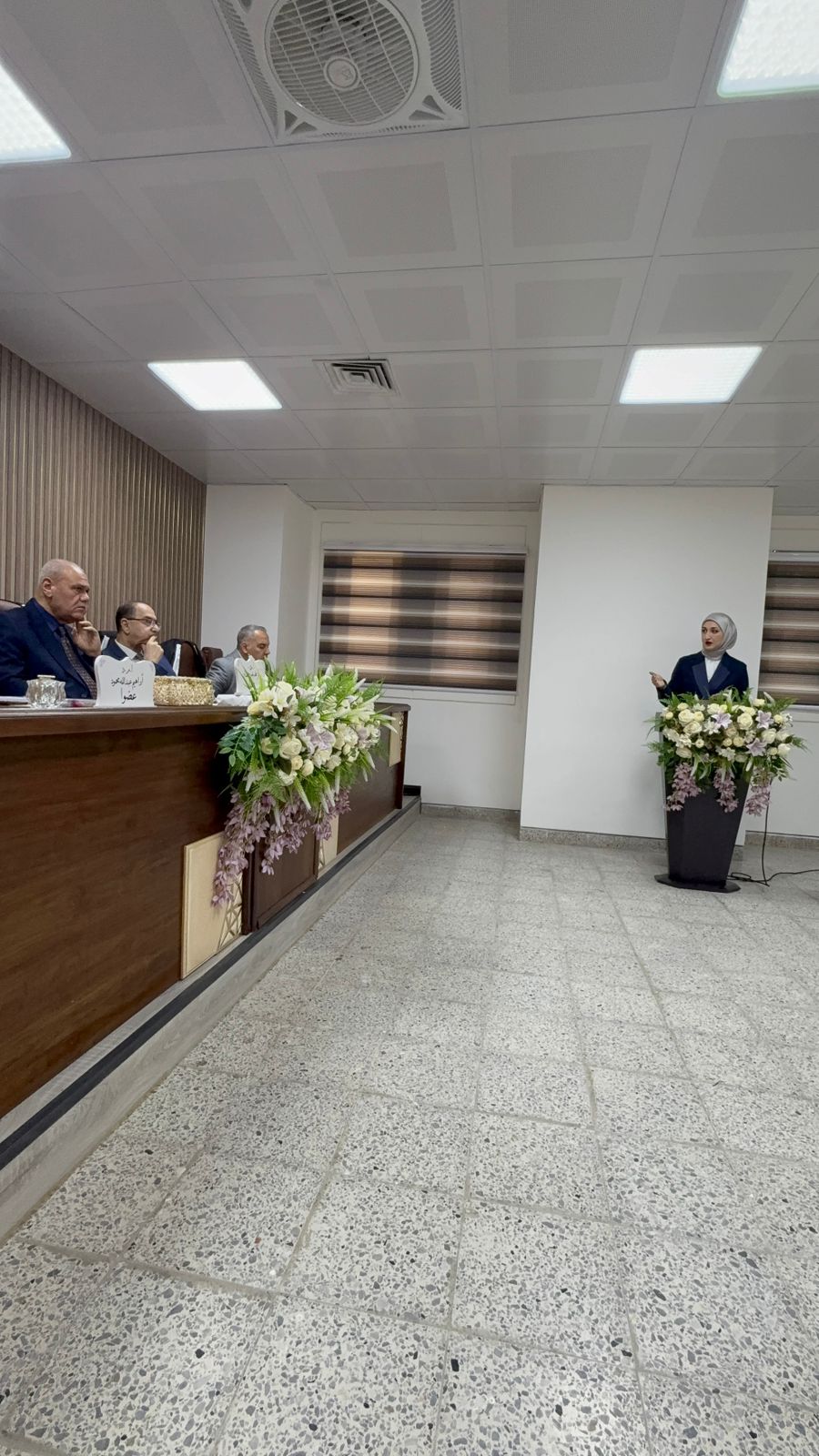


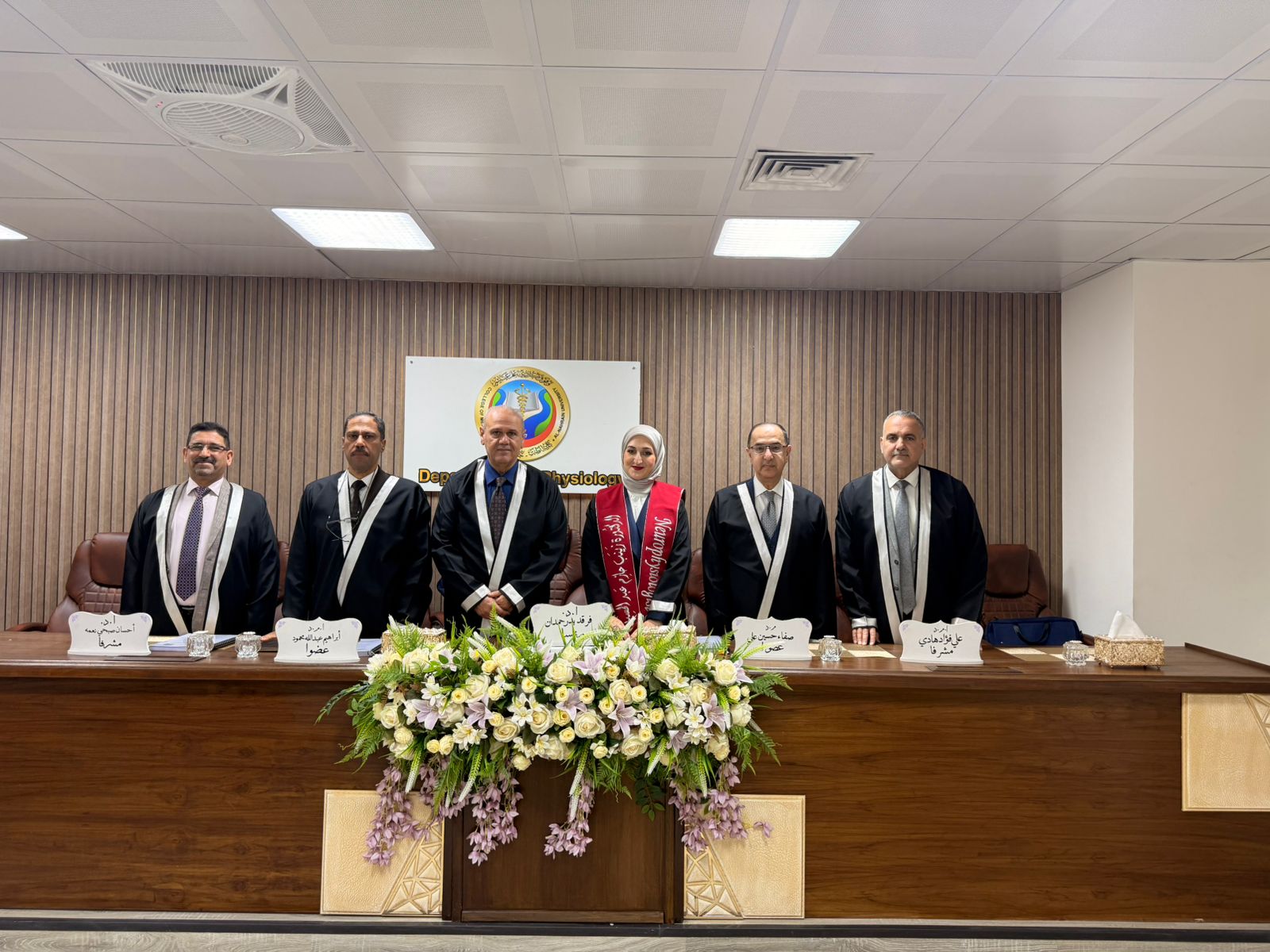
Discussion of the Master’s student Zainab Hazem Abdul Hussein in the Department of Physiology, College of Medicine, Al-Nahrain University.
The Master’s thesis of Zainab Hazem Abdul Hussein was discussed in the Department of Physiology, College of Medicine, Al-Nahrain University, entitled:
“Diagnostic Utility of Electrophysiologic Study versus Nerve Ultrasound in Patients with Neurologic Neck Pain”
Study Objective
The primary aim of the study was to evaluate nerve conduction studies versus neuromuscular ultrasound in confirming the diagnosis of neurologic neck pain, and to compare the sensitivity and specificity of both modalities in detecting the various causes of neurologic neck pain.
Study Population
The study included 100 patients (mean age 46.23 ± 12.1 years; 78% females and 22% males). The condition was classified as chronic in 72% of the sample.
Final Diagnoses
* Cervical radiculopathy only: 45.5%
* Cervical radiculopathy with concomitant carpal tunnel syndrome: 45%
* Carpal tunnel syndrome only: 5%
* Brachial plexopathy: 1%
* Normal findings: 3.5%
Carpal Tunnel Syndrome (CTS)
CTS was confirmed in 102 hands (51%), which demonstrated significantly prolonged distal motor and sensory latencies, along with reduced conduction amplitudes and velocities (p < 0.001).
The mean cross-sectional area (CSA) of the median nerve was significantly larger in affected hands (13.75 ± 3.95 mm²) compared to unaffected hands (10.15 ± 3.33 mm²) (p < 0.001).
Receiver operating characteristic (ROC) curve analysis showed moderate sensitivity (72%) and specificity (76%) for diagnosing CTS.
The median nerve CSA increased significantly with CTS severity (p < 0.001).
Neuromuscular ultrasound demonstrated moderate sensitivity and specificity in differentiating:
* Mild vs. moderate CTS at a cutoff value of 12.5 mm² (72% and 76%, respectively).
* Moderate vs. severe CTS (69% and 72%, respectively).
Cervical Radiculopathy (CR)
Sensory and motor nerve conduction studies of proximal and distal nerves, as well as plexus cords, were normal in both acute and chronic cases.
Ultrasound revealed significantly greater enlargement of cervical nerve root CSA (C5–C7) in limbs affected by radiculopathy compared to unaffected limbs, with statistically significant enlargement of all studied roots in chronic cases (p < 0.001).
ROC curve analysis demonstrated high specificity (100%) and moderate to high sensitivity (72–90%) in distinguishing chronic from acute cervical radiculopathy based on CSA measurements.
Conclusions
Neuromuscular ultrasound of cervical nerve roots (C5–C7) is a valuable diagnostic test for detecting cervical radiculopathy and a useful tool for assessing chronicity, particularly at the C7 root, which showed high sensitivity and specificity.
Furthermore, the median nerve CSA is valuable in diagnosing and grading the severity of carpal tunnel syndrome, with moderate sensitivity and specificity.
Finally, neuromuscular ultrasound is acomplementary, less time-consuming, non-invasive, and accessible diagnostic modality for neurologic neck pain. It should be interpreted in conjunction with clinical findings, nerve conduction studies, and advanced imaging techniques.
Examination Committee
* Prof. Farqad Badr Hamdan – Chairperson
* Assist. Prof. Ibrahim Abdullah Mahmoud – Member
* Prof. Safaa Hussein Ali – Member
* Assist. Prof. Ali Fouad Hadi – Member & Supervisor
* Prof. Ihsan Subhi Neama – Member & Supervisor
The thesis was accepted with the grade of Excellent.