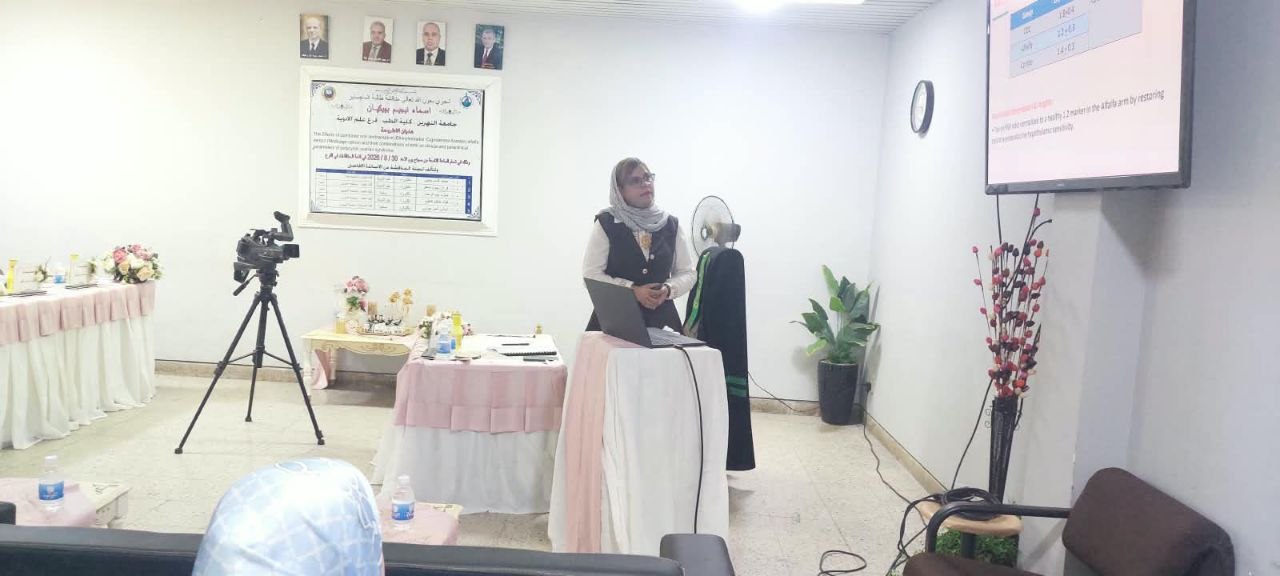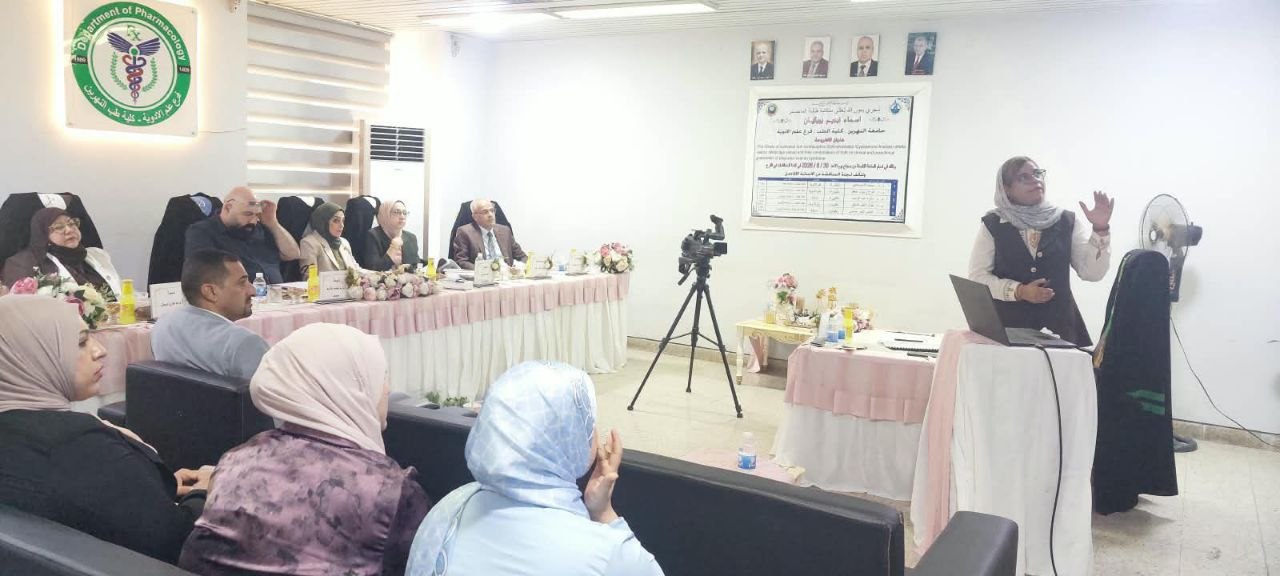


Master’s Thesis Defense Examines the Effects of Alfalfa Extract in the Management of Polycystic Ovary Syndrome
On Sunday, August 30, 2026, the Master’s thesis of postgraduate student Asmaa Najm Behkian Sayed, from the Department of Pharmacology, was discussed. The thesis was entitled:
The Effects Of Combined Oral Contraceptive (Ethinyl estradiol/Cyproteron acetate), Alfalfa extract (Medicago Sativa) and their combinations of both on Clinical and Paraclinical Parameters of Polycystic Ovarian Syndrome.
The study aimed to evaluate the effects of low-dose combined oral contraceptives, alfalfa extract, and their combination on the clinical and paraclinical parameters of polycystic ovary syndrome (PCOS), through the assessment of the following parameters:
-
Free Androgen Index (FAI): measured before the initiation of the study and after 12 weeks.
-
Hormonal profile: including Sex Hormone-Binding Globulin (SHBG), Dehydroepiandrosterone sulfate (DHEAS), Luteinizing Hormone (LH), and Follicle-Stimulating Hormone (FSH).
-
Metabolic profile: including glycated hemoglobin (HbA1c) and blood lipid levels.
-
Inflammatory marker: C-reactive protein (CRP).
-
Ultrasonographic assessment: including Antral Follicle Count (AFC) and mean ovarian volume.
-
Anthropometric parameters: including Body Mass Index (BMI) and waist circumference.
Study Findings
The results demonstrated that alfalfa extract, whether used alone or in combination with combined oral contraceptives, was effective in improving clinical, hormonal, metabolic, and reproductive parameters in women with PCOS.
A significant reduction was observed in Free Androgen Index (FAI), testosterone levels, Ferriman–Gallwey score, acne severity, DHEAS levels, HbA1c, LDL cholesterol, triglycerides, and C-reactive protein (CRP). In addition, improvements were observed in Sex Hormone-Binding Globulin (SHBG) levels, ovulation rates, and menstrual cycle regularity.
The group receiving the combined treatment demonstrated the highest rates of ovulation and menstrual cycle regularity. Meanwhile, the alfalfa group showed notable improvements in androgenic and metabolic parameters, with fewer adverse effects compared with the combined oral contraceptive group.
Accordingly, alfalfa extract appears to be a promising and well-tolerated therapeutic option and may represent an effective alternative or adjunct to conventional hormonal therapy in the management of polycystic ovary syndrome.
These findings support the possibility that alfalfa may exert beneficial effects on certain biochemical and hormonal abnormalities associated with PCOS, particularly androgen-related parameters, and that its effects may complement those of combined oral contraceptives.
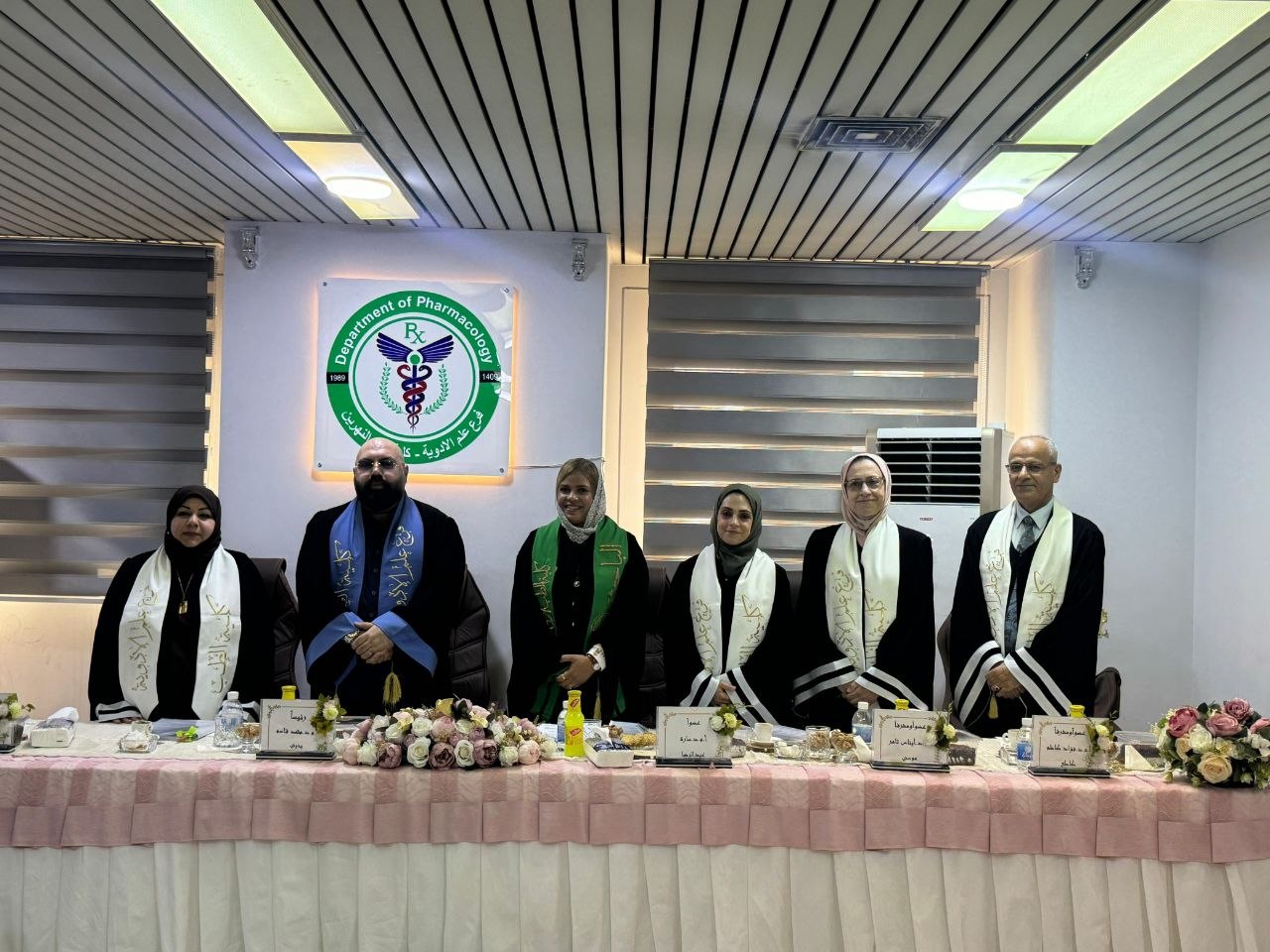
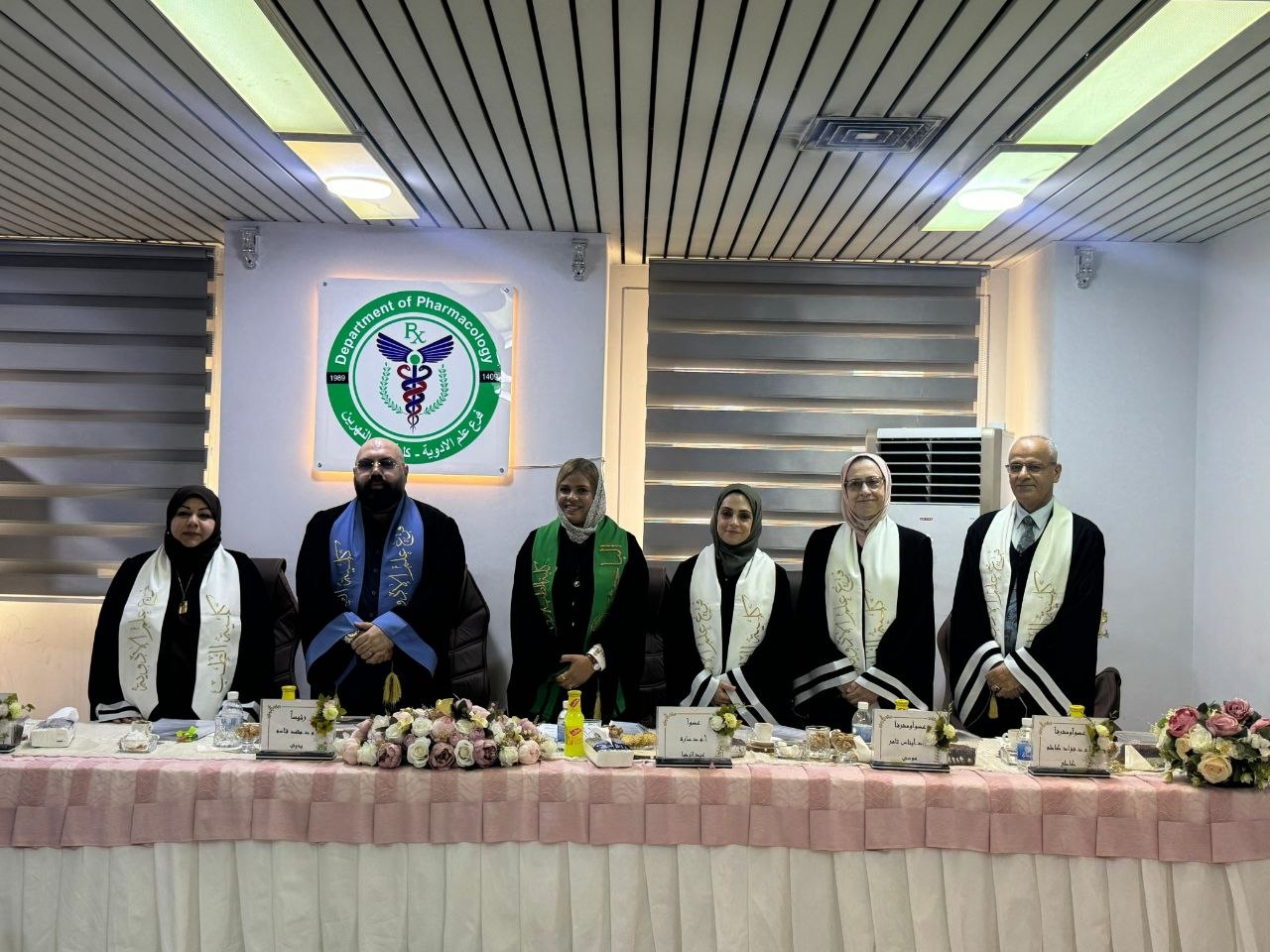
Thesis Defense Committee
-
Assistant Professor Dr. Mohammed Qasim Yahya – Chair
-
Assistant Professor Dr. Farah Rasoul Jaafar – Member
-
Assistant Professor Dr. Sarah Abdulridha – Member
-
Assistant Professor Dr. Fuad Kadhim Kati – Member and Supervisor
-
Assistant Professor Dr. Enas Thamer Mousa – Member and Supervisor
The thesis was successfully accepted with a grade of Very Good.
Media and Government Communication Division
College of Medicine, Al-Nahrain University