

Al-Nahrain University College of Medicine Discusses a Master’s Thesis Investigating Muscle Endurance, Strength, and Power as Determinants of Hip Bone Mineral Density in Patients with Rheumatoid Arthritis
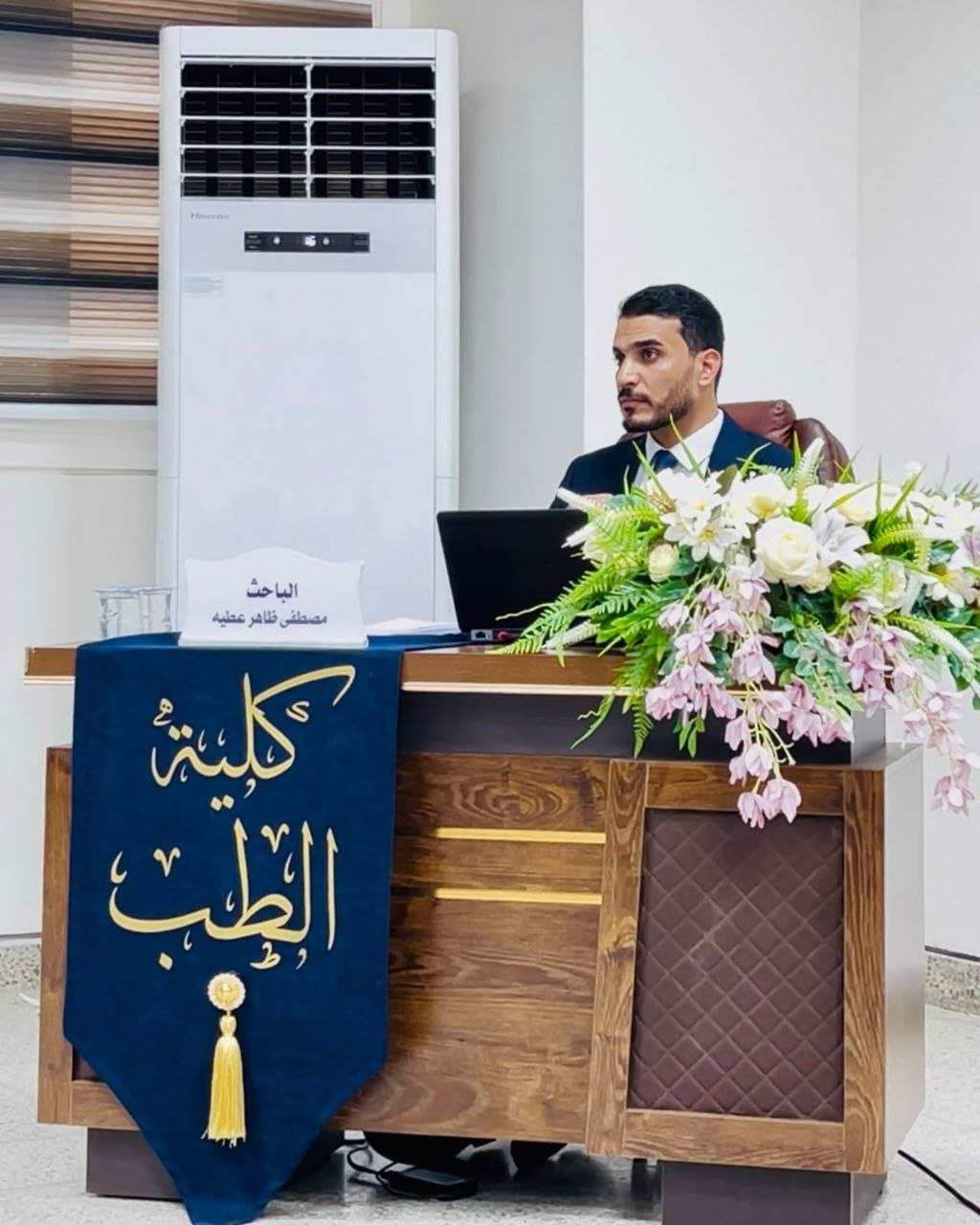
On Sunday, September 6, 2026, the College of Medicine at Al-Nahrain University, Department of Physiology and Medical Physics, held a discussion of the Master’s thesis submitted by Mustafa Dhahir Atiyah Al-Mousawi, entitled:
“Evaluating Muscle Endurance, Strength, and Power as Determinants of Hip BMD in Rheumatoid Arthritis versus Healthy Adults Using DEXA.”
The study aimed to compare hip bone mineral density (BMD) between patients with rheumatoid arthritis and apparently healthy individuals using dual-energy X-ray absorptiometry (DXA). It also evaluated a number of tests assessing muscle strength and motor function, including handgrip strength, the Five Times Sit-to-Stand Test (FTSST), a hanging spring scale, Manual Muscle Testing (MMT) according to the Medical Research Council (MRC) scale, and the modified Sphygmomanometer Test (MST). In addition, the study sought to determine which of these tests was most accurate in assessing muscle weakness and to investigate the relationship between muscle strength indicators and hip bone mineral density.
The findings showed no statistically significant differences in hip bone mineral density between patients with rheumatoid arthritis and healthy individuals, either on the right or left side. Likewise, no significant differences were observed in T-score and Z-score values between the two groups among premenopausal and postmenopausal women.
In contrast, the results demonstrated a significant reduction in muscle strength among patients with rheumatoid arthritis in most of the tests performed. Handgrip strength was significantly lower in patients than in healthy individuals (18.36 ± 8.77 kg vs. 23.45 ± 5.11 kg, P < 0.001). The time required to complete the Five Times Sit-to-Stand Test was also significantly longer among patients (17.13 ± 6.76 seconds vs. 13.33 ± 3.3 seconds, P = 0.001). A significant reduction was also observed in knee flexion and extension strength as measured by the hanging spring scale, in addition to lower Manual Muscle Testing (MMT) scores among patients (4.32 ± 0.52 vs. 5.00 ± 0.00, P < 0.001).
Furthermore, the modified Sphygmomanometer Test (MST) in the flexion position showed significantly higher values among patients compared with healthy individuals (144.93 ± 34.22 mmHg vs. 120.27 ± 28.12 mmHg, P < 0.001), whereas no statistically significant difference was observed in the extension position (P = 0.940).
The Receiver Operating Characteristic (ROC) curve analysis demonstrated that the Manual Muscle Testing (MMT) was the most accurate test for distinguishing patients with rheumatoid arthritis from healthy individuals, with an area under the curve (AUC) of 0.829 (P < 0.001), a sensitivity of 100%, and a specificity of 65.9% at a cutoff value of 4.5. It was followed by the handgrip strength test (AUC = 0.731, P < 0.001) and the hanging spring scale in the flexion and extension positions (AUC = 0.743 and 0.720, respectively), followed by the Five Times Sit-to-Stand Test (AUC = 0.710). In contrast, the modified Sphygmomanometer Test in the extension position demonstrated poor and statistically non-significant performance (AUC = 0.526, P = 0.683).
These findings support the presence of marked muscle weakness in patients with rheumatoid arthritis, even in the absence of a significant reduction in hip bone mineral density. This suggests that muscle weakness may occur independently of changes in bone density and highlights the importance of routine assessment of muscle strength in patients with rheumatoid arthritis, which may contribute to reducing the risk of falls and fractures.
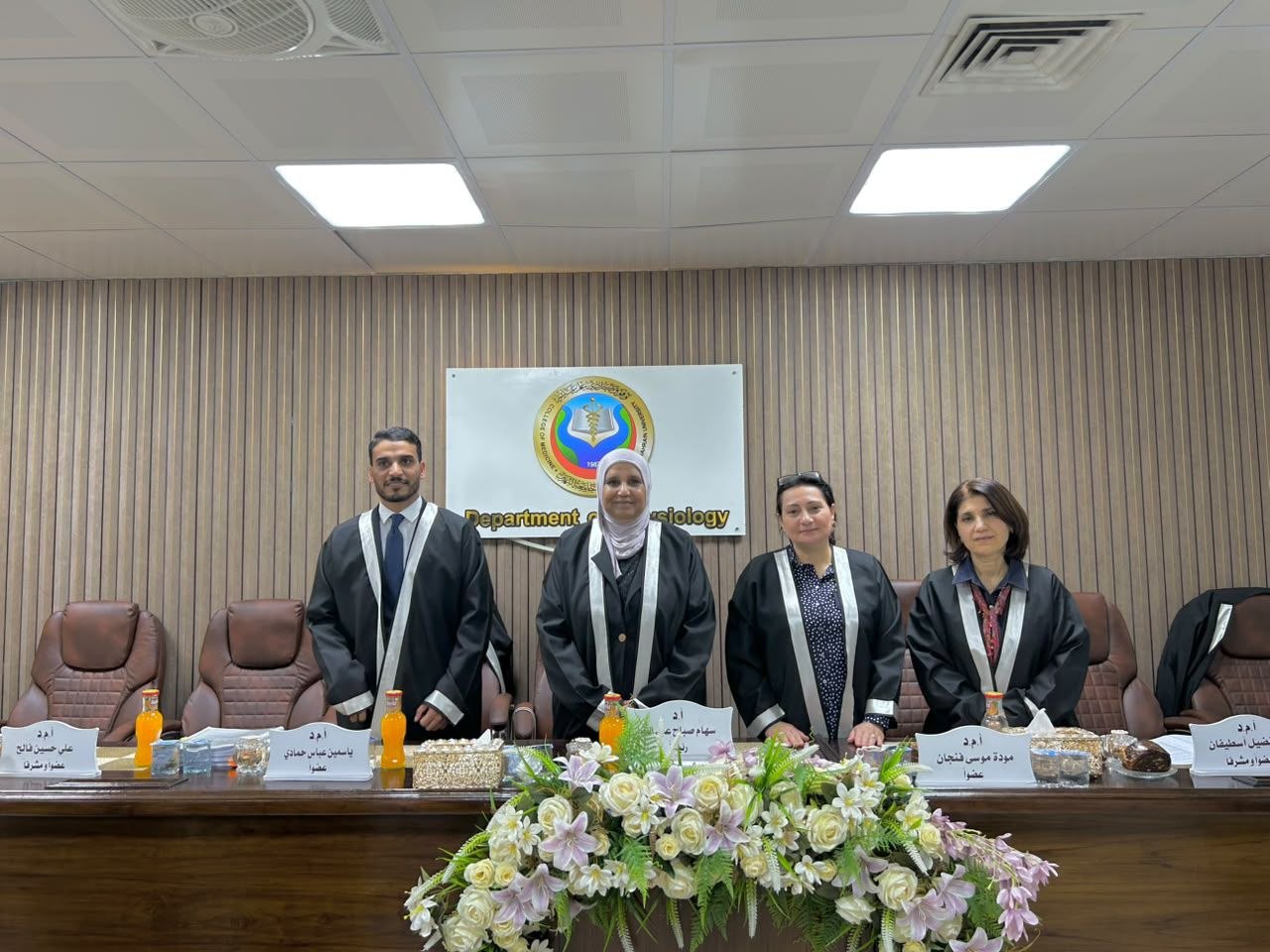
Thesis Discussion Committee
The discussion committee consisted of:
-
Prof. Dr. Siham Sabah Abdullah – Chair
-
Assist. Prof. Dr. Yasmin Abbas Hamadi – Member
-
Assist. Prof. Dr. Muda Musa Finjan – Member
-
Assist. Prof. Dr. Mai Fadhil Asteifan – Member and Supervisor
-
Assist. Prof. Dr. Ali Hussein Falih – Member and Supervisor
The thesis was successfully approved with an “Excellent” grade.
Media and Government Communication Division
College of Medicine – Al-Nahrain University