

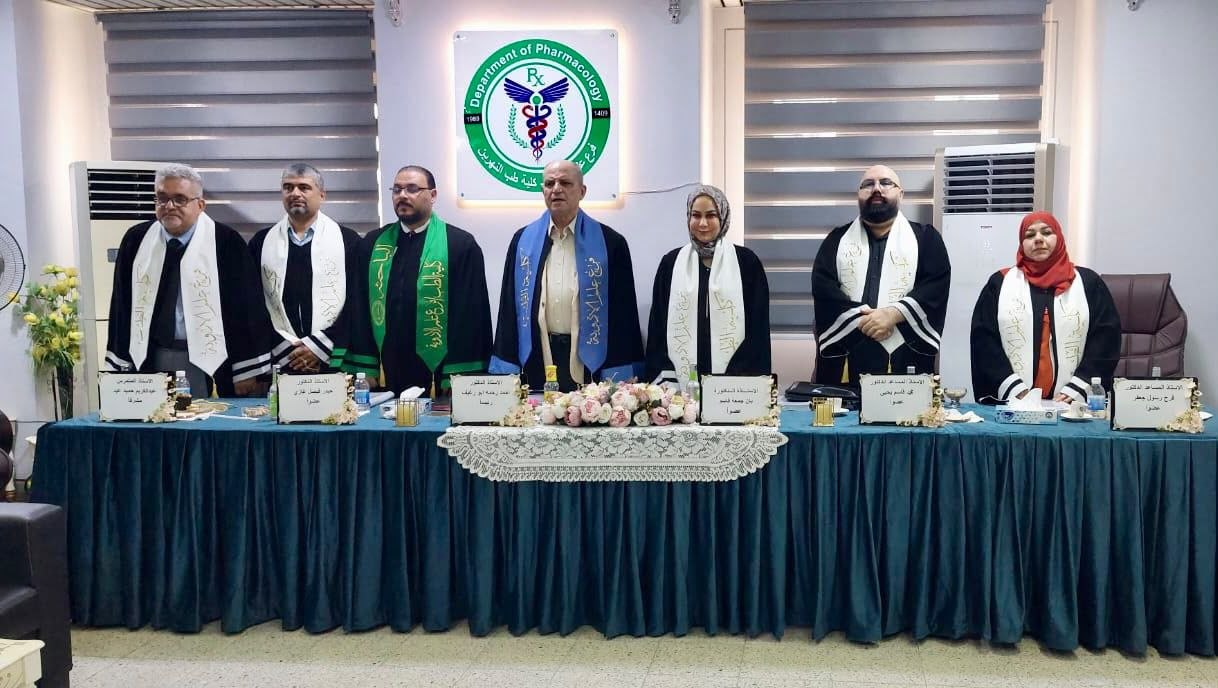
PhD Dissertation at Al-Nahrain University College of Medicine Explores the Development of Promising Multi-Target Compounds for Cancer Therapy
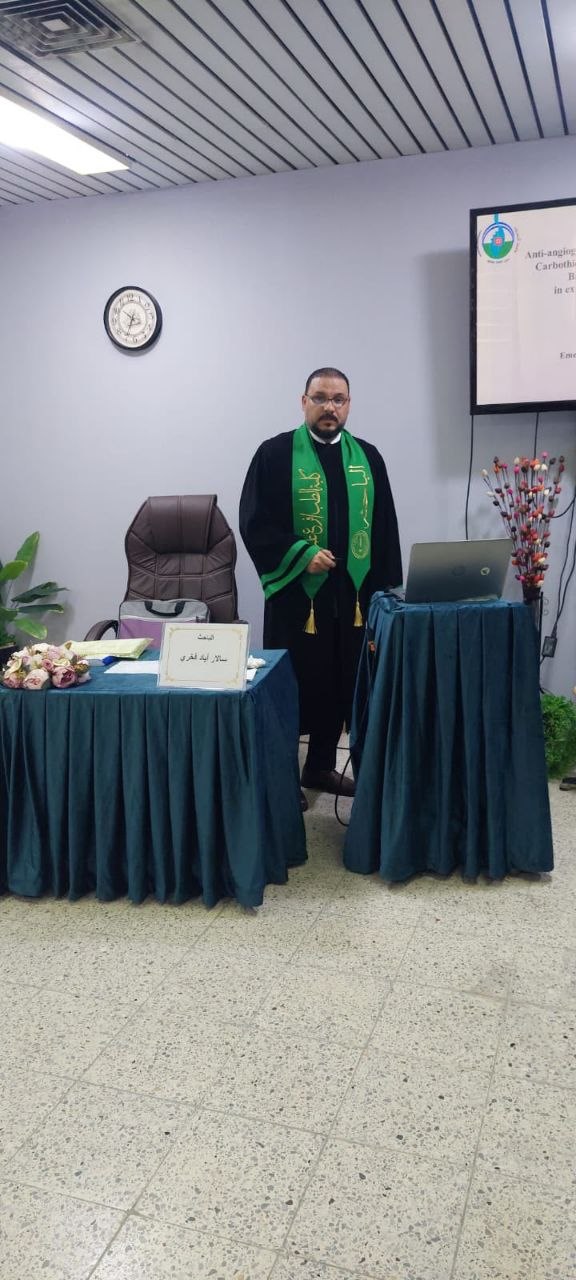
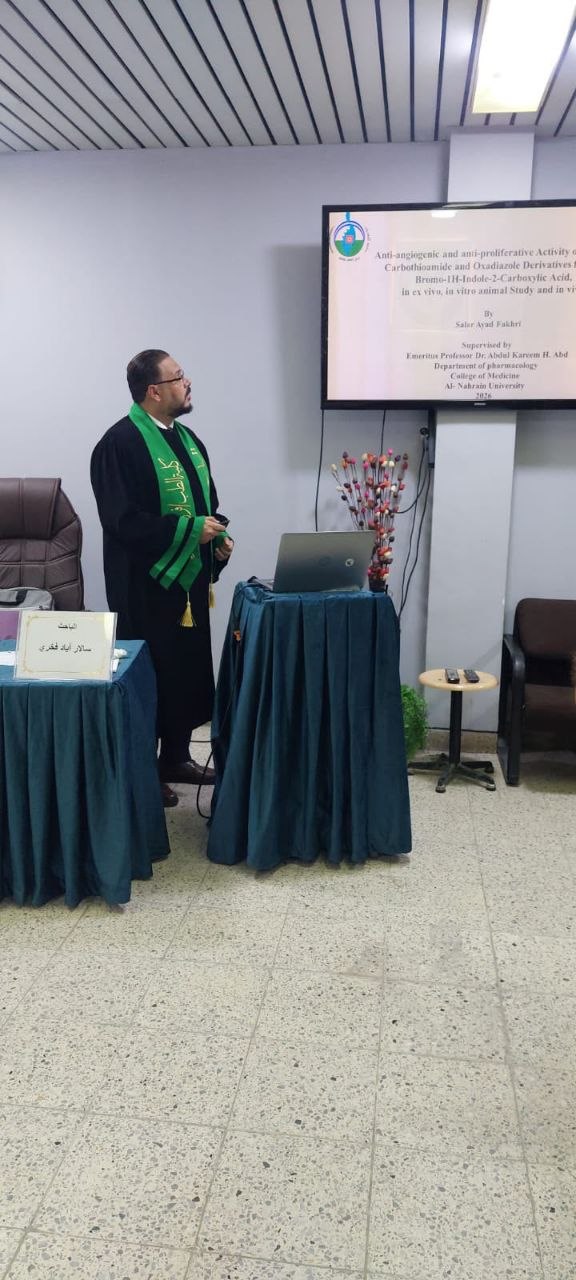
On Thursday, July 30, 2026, the College of Medicine at Al-Nahrain University held the PhD dissertation defense of Mr. Salar Iyad Fakhri, a doctoral candidate in the Department of Pharmacology. The dissertation was entitled:
Anti-angiogenic and anti-proliferative activity of 4-toloyl carbothioamid, and oxadiazole derivatives from 5-bromo-1H-indole-2-carboxylic acid, in ex vivo, in vitro animal study and in vivo
The study aimed to evaluate the anti-angiogenic, anti-proliferative, antioxidant, and vascular endothelial growth factor (VEGF)-modulating activities of two novel hybrid compounds derived from 5-bromoindole:
-
2-(4-(Benzyloxy)phenyl)-5-(5-bromo-1H-indol-2-yl)-1,3,4-oxadiazole (BBI-OXD)
-
2-(5-Bromo-1H-indole-2-carbonyl)-N-(p-tolyl)hydrazine-1-carbothioamide (BTI-TSC)
The research also assessed their potential as promising multi-target anticancer agents.
The findings demonstrated that both compounds exhibited concentration-dependent biological activity across all experimental models investigated. In the rat aortic ring assay, the IC₅₀ values were 26.64 μg/mL for BBI-OXD and 35.5 μg/mL for BTI-TSC. In the chorioallantoic membrane (CAM) assay, both compounds significantly inhibited angiogenesis, producing inhibition zones of 12.5 ± 1.05 mm for BBI-OXD and 8.0 ± 1.12 mm for BTI-TSC.
The MTT assay revealed potent cytotoxic activity against breast cancer and lung cancer cell lines, with IC₅₀ values ranging from 3.5 to 6.08 μg/mL, while the IC₅₀ values against human umbilical vein endothelial cells (HUVECs) were 9.3 μg/mL and 10.4 μg/mL, respectively.
In the DPPH free radical scavenging assay, both compounds demonstrated notable antioxidant activity, with IC₅₀ values of 17 μg/mL for BBI-OXD and 13.65 μg/mL for BTI-TSC. Furthermore, both compounds significantly reduced VEGF gene expression in a concentration-dependent manner, with BTI-TSC producing a greater reduction than BBI-OXD.
These findings support the conclusion that both compounds possess multifunctional anticancer properties and represent promising lead candidates for the development of novel anticancer drugs. Their multi-target activity against angiogenesis, cancer cell proliferation, oxidative stress, and VEGF expression provides a strong scientific rationale for further mechanistic investigations and future preclinical studies.
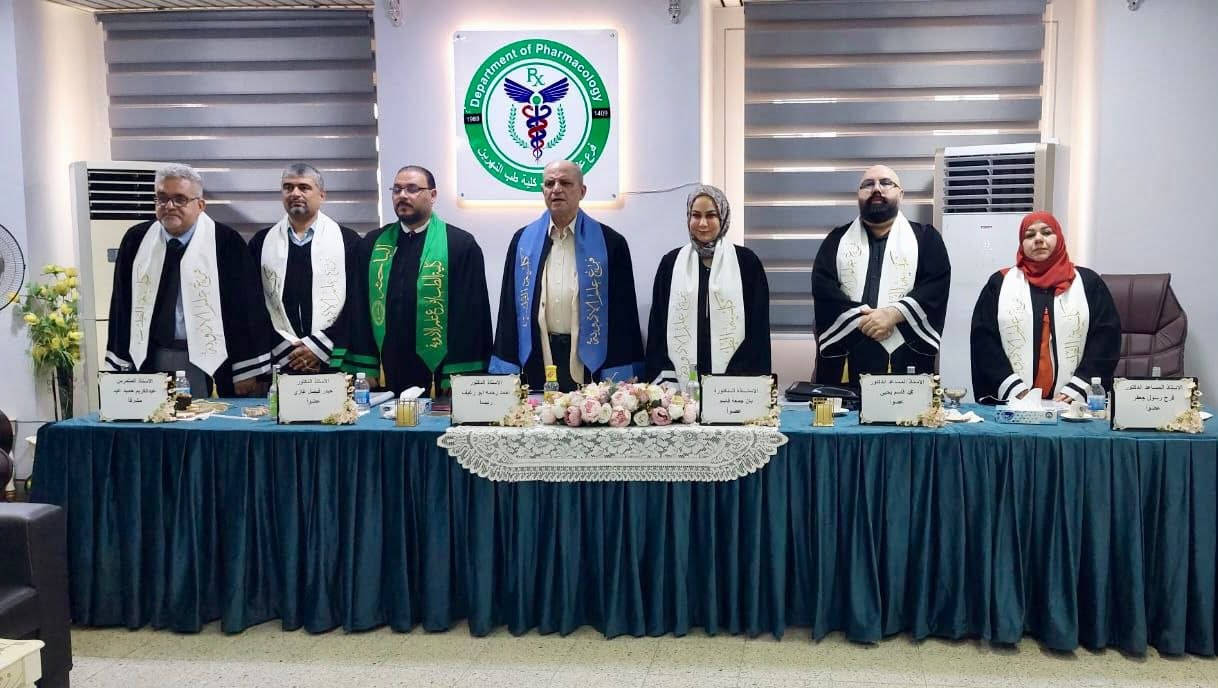
Dissertation Examination Committee:
-
Prof. Dr. Ahmed Rahma Abu Raghif – Chair
-
Prof. Dr. Ban Jumaa Qasim – Member
-
Prof. Dr. Haider Faisal Ghazi – Member
-
Assist. Prof. Dr. Mohammed Qasim Yahya – Member
-
Assist. Prof. Dr. Farah Rasool Jaafar – Member
-
Prof. Emeritus Dr. Abdul Karim Hamid Abd – Member and Supervisor
The dissertation was approved with the grade of Very Good.
Media and Government Communication Division
College of Medicine – Al-Nahrain University