

Master’s Study at the College of Medicine, Al-Nahrain University Investigates Promising Biomarkers for the Assessment of Metabolic Dysfunction-Associated Steatotic Liver Disease
A Master’s thesis by Rahab Kadhim Abdul, from the Department of Chemistry and Biochemistry, College of Medicine, Al-Nahrain University, was discussed. The thesis was entitled:
“Evaluation of Serum Levels of Zinc Protoporphyrin, Heme Oxygenase-1, Hepcidin, and Soluble Transferrin Receptor as Biomarkers in Metabolic Dysfunction-Associated Steatotic Liver Disease (MASLD).”
The study aimed to evaluate serum levels of zinc protoporphyrin, heme oxygenase-1, hepcidin, and soluble transferrin receptor as potential biomarkers in metabolic dysfunction-associated steatotic liver disease (MASLD). It also investigated their associations with biochemical and metabolic changes and iron metabolism parameters, as well as assessed their ability to differentiate between different disease conditions and healthy individuals.
The results demonstrated a significant increase in the levels of the studied biomarkers among patients with metabolic dysfunction-associated steatotic liver disease (MASLD) and metabolic dysfunction-associated steatohepatitis (MASH) compared with healthy individuals. The biomarker levels were higher in the MASH group.
Receiver operating characteristic (ROC) curve analyses demonstrated high diagnostic performance of the studied biomarkers in differentiating patients from healthy individuals. Zinc protoporphyrin and soluble transferrin receptor showed excellent discriminatory ability for MASLD, whereas zinc protoporphyrin and heme oxygenase-1 demonstrated excellent discriminatory ability for MASH compared with healthy individuals, in addition to the high diagnostic performance of hepcidin.
Multivariable logistic regression analysis showed that zinc protoporphyrin, hepcidin, and soluble transferrin receptor retained independent statistically significant associations with the spectrum of metabolic dysfunction-associated steatotic liver disease after adjustment for the clinical and metabolic factors examined. In contrast, heme oxygenase-1 did not retain an independent statistically significant association after adjustment.
The study concluded that alterations in biomarkers related to iron metabolism, heme metabolism, and oxidative stress were associated with metabolic dysfunction-associated steatotic liver disease. The studied biomarkers, particularly zinc protoporphyrin, hepcidin, and soluble transferrin receptor, demonstrated promising potential as adjunctive biomarkers for disease assessment and differentiation among its clinical groups.
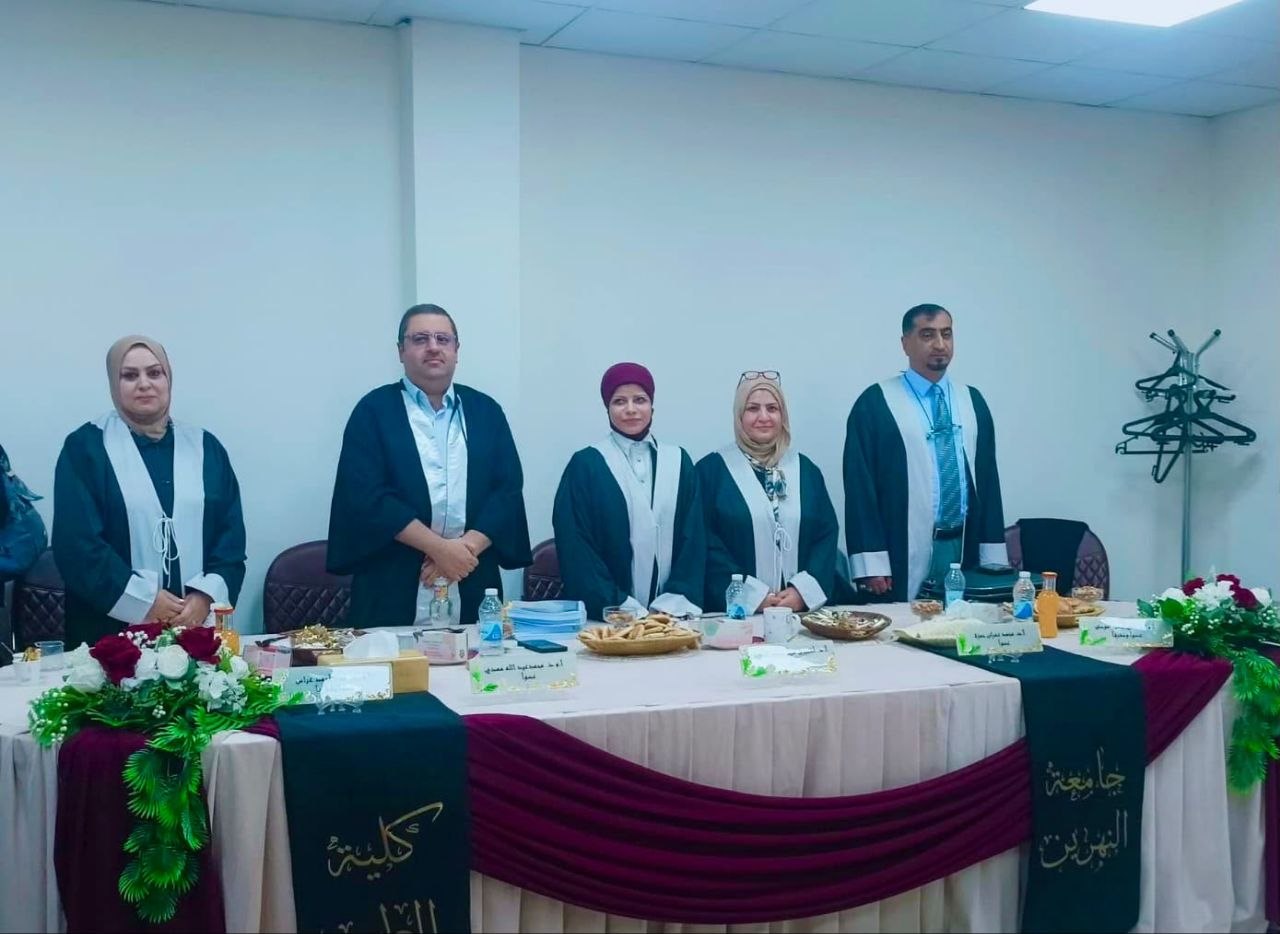
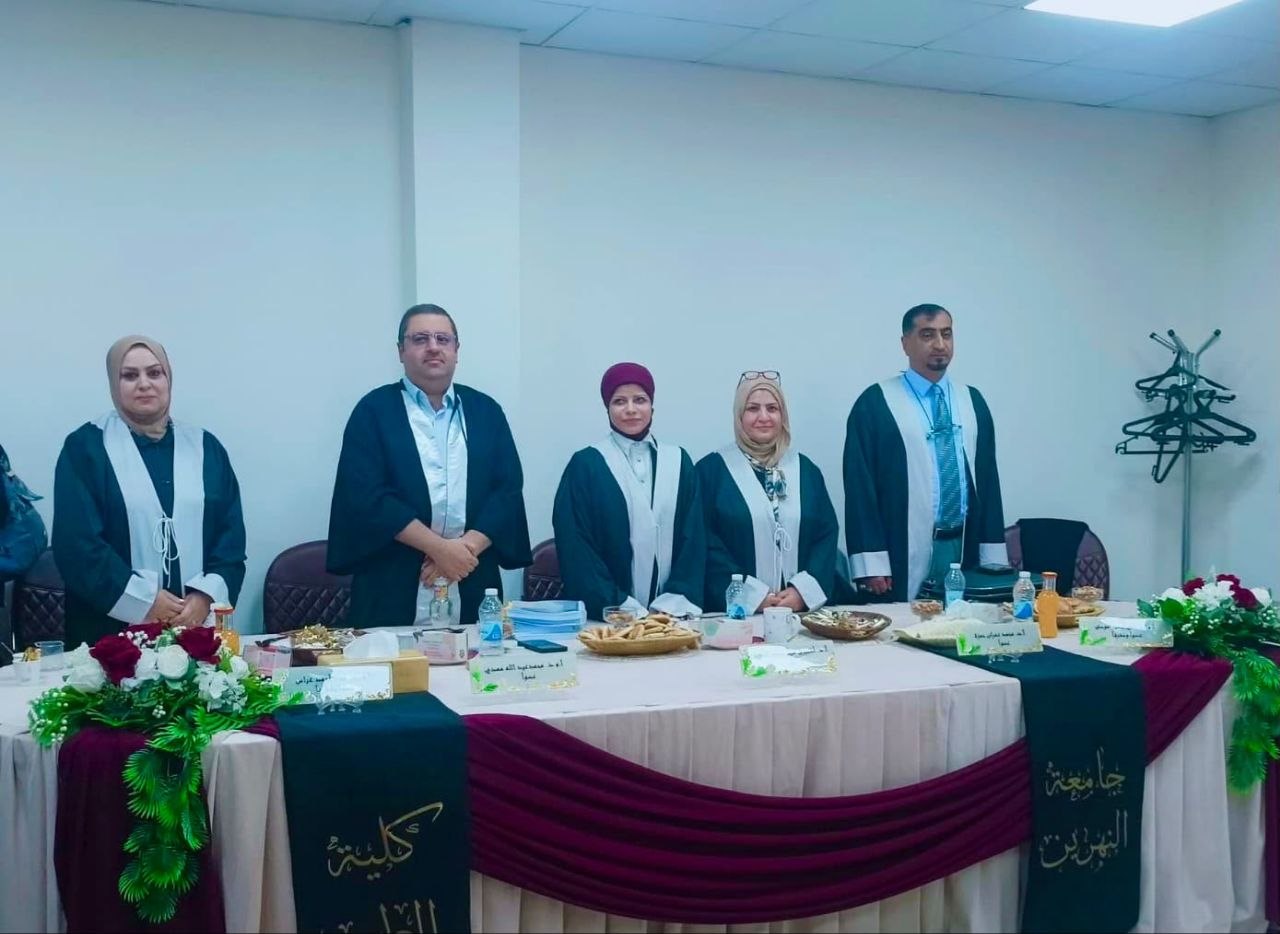
The discussion committee consisted of:
-
Prof. Dr. Astabraq Abdul Rasool — Chair
-
Prof. Dr. Mohammed Imran Hamza — Member
-
Lecturer Dr. Mohammed Abdullah Mahdi — Member
-
Asst. Prof. Dr. Hind Ahmed Abbas — Member and Supervisor
-
Asst. Prof. Dr. Ali Sameer Al-Shammaa — Member and Supervisor
At the conclusion of the discussion, the thesis was successfully approved, and the student was awarded a grade of Excellent.
Media and Government Communication Division
College of Medicine – Al-Nahrain University